REVIEW · NORTHERN IRELAND
Adult Foraging Walk & Bushcraft Cookery Course for Beginners
Book on Viator →Operated by BallyBurren Outdoor Escapes · Bookable on Viator
Wild food turns nervous into confident fast. This Adult Foraging Walk & Bushcraft Cookery course in Northern Ireland mixes plant ID, hands-on bushcraft, and real outdoor cooking, led by David at BallyBurren Outdoor Escapes. I especially like how the group stays small, so you’re not just watching—you’re getting coached as you learn the basics of foraging. I also like that the session moves from finding to cooking, not just theory and photos, with David described as patient and helpful by past guests.
One thing to plan around is the time. At about 3 hours 30 minutes, you’ll cover a lot (walk, identification, camp tasks, cooking, and tasting), so you won’t get a long, slow ramble or an advanced “species deep dive.” If you’re hoping to leave with a full field guide packed with confidence on every plant, treat this as an excellent beginner start—not the end of your learning.
In This Review
- Key things to know before you go
- BallyBurren in Northern Ireland: a foraging course that feels practical
- The 3.5-hour flow: from car park meet-up to campfire plates
- Plant identification basics with David: what you’ll actually be able to use
- The forage walk: ethics, safety, and not taking more than you should
- Bushcraft cookery on an open fire: whittling, making tools, then eating
- Tasting out of season produce: learning the bigger wild-food picture
- What you take home: skills, confidence, and small keepsakes
- Price and value: is $88.24 for 3.5 hours fair?
- Who should book this foraging and cookery course in Northern Ireland
- Should you book it? My honest take
- FAQ
- Where does the course start and where does it end?
- How long is the Adult Foraging Walk & Bushcraft Cookery course?
- Is this experience offered in English?
- What’s the group size?
- What happens during the experience?
- Do you cook and eat what you forage?
- Is there a tasting component beyond foraged items?
- Is a mobile ticket used?
- Are service animals allowed?
- What’s the cancellation policy for a full refund?
Key things to know before you go
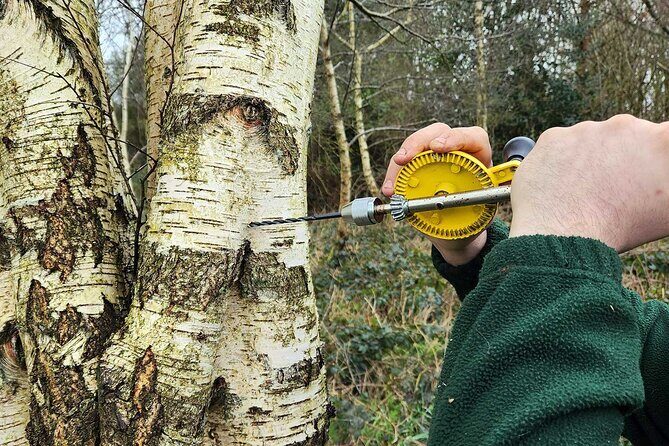
Small group, big attention: Up to 8 people means questions get answered on the spot.
Beginner-first plant ID: You get a basic framework for recognizing commonly foraged plants.
Cook with what you find: Foraged ingredients go into the meal, cooked over an open fire.
Hands-on bushcraft tasks: You’ll make items like wooden spoons and other simple tools.
Tasting out of season produce: You’ll get a chance to compare and learn how wild foods fit beyond the current season.
Guide David sets the tone: Reviews repeatedly highlight his patience and clear teaching style.
BallyBurren in Northern Ireland: a foraging course that feels practical
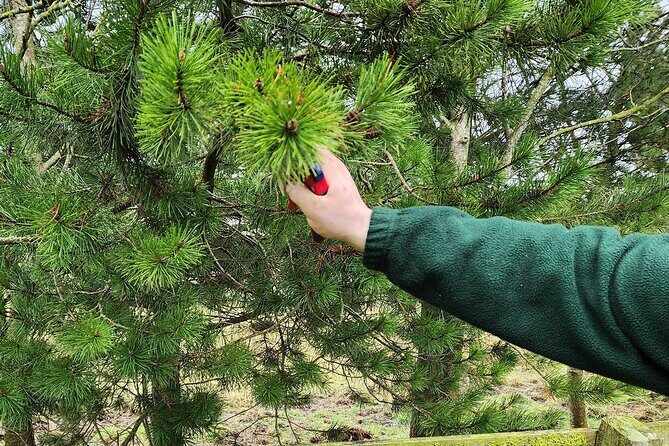
This is the kind of course that makes sense even if you’ve never foraged before. You’re in Northern Ireland at BallyBurren Outdoor Escapes, and the setup is geared for learning by doing. The point isn’t to impress you with fancy jargon. The point is to help you get your bearings fast: how to look, how to confirm, and how to think about what’s safe to eat.
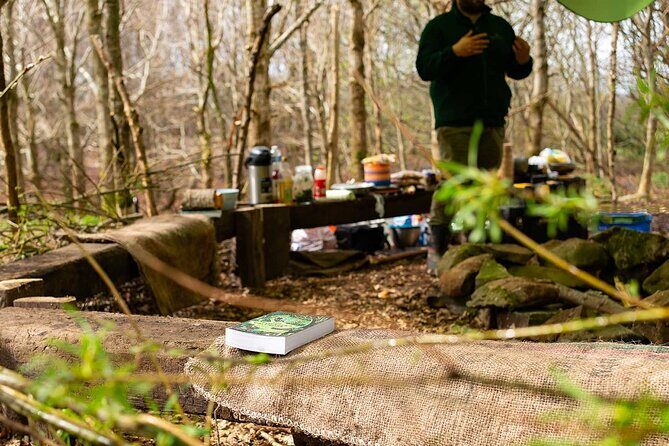
I also like the vibe of the setting. It’s outdoors, with wooded areas and the feel of a proper learning space rather than a classroom that happens to have trees nearby. That matters because foraging is visual. You need to see leaves, shapes, textures, and growth patterns in context. Being outside from the start helps your brain file things where they belong.
And then there’s the cooking part. A lot of foraging experiences stop at the walk. Here, you’re pushed to translate your learning into food. That’s a huge confidence builder. If you can cook and taste what you foraged, you’re more likely to remember the plants—and more likely to respect the rules that keep foraging safe.
You can also read our reviews of more walking tours in Northern Ireland
The 3.5-hour flow: from car park meet-up to campfire plates
The session is built like a tight circuit: you meet, walk, learn, forage, cook, taste, and head back. The whole thing runs about 3 hours 30 minutes. That pace is part of the value. You get multiple skills in one afternoon without needing a whole weekend of training.
Here’s how the day typically moves, in plain terms:
Meet at the car park
You start at BallyBurren Outdoor Escapes, 143 Dromore Rd, Ballynahinch BT24 8HZ, UK. Meeting at a car park is practical. It keeps logistics simple and helps you focus on the session instead of getting lost.
Walk to the forest school site
Then you head to the forest school area. This transition isn’t just travel time; it gets you into “outdoor mode” so the plant identification part lands naturally.
Brief intro on plant identification
Before you start collecting, you get a primer. This is where beginners often need the most help: what to look for, how to approach identification carefully, and how to think about seasonality and culinary use.
Forage walk
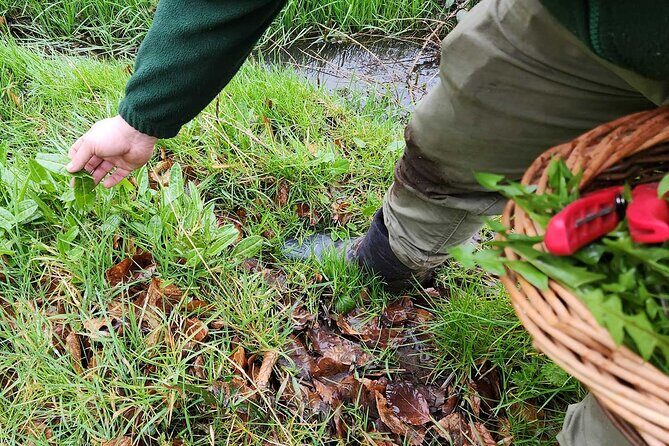
Next comes the foraging walk. This is the heart of the course because it links the classroom-style intro to real-world searching. With a group size max of 8, you’re more likely to get guidance when you’re staring at a plant and wondering if your match is correct.
Food preparation and camp cooking
After the walk, you move into cooking and camp tasks. Reviews mention making items like mallets and whittling spoons, plus learning how to make fires and cook over an open flame. Even if you’ve never done any of that, you’ll get guided steps rather than a sink-or-swim setup.
Tasting out of season produce
You also end with a tasting that includes out-of-season produce. This is one of the smarter teaching moments in the plan. It shows you that wild food knowledge isn’t locked to one week in one month—it connects to how wild foods are used, preserved, and planned for across seasons.
Return to the car park
Finally, you head back to the meeting point. The timing keeps the experience energy high and manageable, especially for people who don’t want a full-day survival bootcamp.
Plant identification basics with David: what you’ll actually be able to use
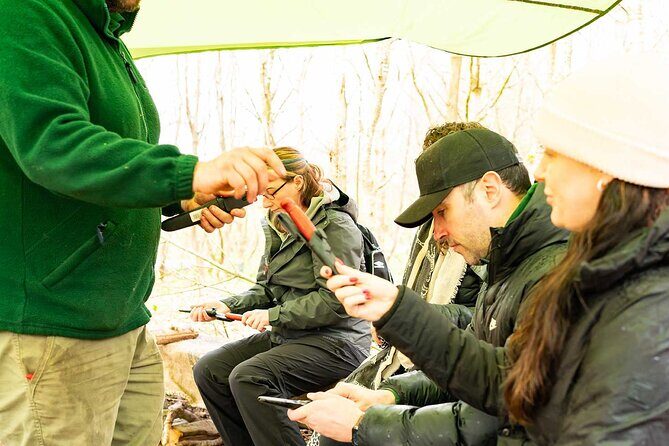
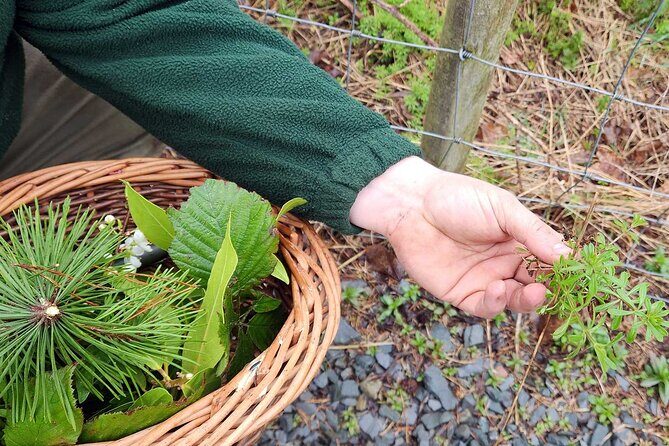
Beginner plant ID is where many foraging activities either shine or fall flat. Here, the approach is structured enough to be useful without getting overwhelming. You’re taught the fundamentals for recognizing commonly foraged plants, and the emphasis is on characteristics, seasonal availability, and how they connect to cooking.
What I like about this style of teaching is that it’s built for real decisions. When you’re outdoors, you won’t have a screen or a reference library in your pocket. So you learn to narrow down what you’re seeing by using visible traits.
David’s teaching reputation shows up clearly in feedback: guests call him informative, helpful, and patient. That’s not a small detail. In foraging, anxiety can make you rush. A patient guide helps you slow down just enough to check what matters.
One more thing that matters for beginners: you’re not just collecting and leaving. The course connects plant ID to food prep and tasting. That means your learning has a payoff. You’re more likely to remember what the plant looked like, what it tasted like, and what role it played in the meal.
The forage walk: ethics, safety, and not taking more than you should
The course focuses on safe and sustainable foraging. You’ll learn ethical practices and how to minimize environmental impact. For me, that’s the difference between a fun outdoor search and an experience that helps you do this responsibly on your own later.
In a small group, the guide can keep a close eye on what you’re choosing. That’s valuable because beginners often overestimate how easy it is to identify plants. A good intro course doesn’t just hand you a list of edible options. It teaches you to treat identification as a process and to respect uncertainty.
The foraging walk is also where you start building a sense of “seasonal rhythm.” You learn what’s available when, and why. That’s a practical skill. It affects what you can forage today, what you might look for next month, and what you should not force just because you want to eat something wild.
And because the course is timed, you’ll feel the reality of foraging: it takes time to look closely. You don’t get to treat it like a quick supermarket trip. That’s good training.
Bushcraft cookery on an open fire: whittling, making tools, then eating
This is where the course turns from learning to living. The bushcraft cookery side gives you a deeper connection to the whole process. You’re not just harvesting and leaving. You’re preparing, cooking, and tasting what you collected in a way that makes sense for wild ingredients.
From the feedback, guests often highlight several hands-on moments:
- making wooden items such as spoons (and other simple woodcraft tasks)
- learning to make fires
- cooking food over an open fire
- using what you foraged in the meal
The campfire cooking part is a big deal for beginners because it forces you to think about how wild plants behave when heated. Some ingredients mellow. Some keep a strong character. Some need smart prep to become pleasant to eat.
And the food itself stands out in the descriptions. Guests mention meals and tastings like nettle soup, pizzas, and banana desserts (including chocolate banana). Whether every dish is identical each run, the takeaway is consistent: you’ll cook real food using wild ingredients and you’ll eat what you make.
This matters for value. If you pay for a foraging course, you want more than a walk. You want a meal and a story you can repeat. Here, you leave with both.



Tasting out of season produce: learning the bigger wild-food picture
One of the most interesting parts of this course is the tasting of out of season produce. It might sound odd at first, especially if you’re expecting everything to come straight from the ground that day.
But it’s actually a smart teaching move. Foraging isn’t only about what you can pick today. It’s about understanding the plant life cycle and how wild foods can be used and planned around longer timelines. Seasonal knowledge is part of safe, responsible foraging too. If you only learn what’s in reach right now, you’ll struggle later and you might push too hard in the wrong season.
By tasting out-of-season produce, you get a nudge toward that broader mindset. You learn to connect what you see on the walk with what else exists in the wild food world—even when conditions aren’t ideal for harvesting.
It also keeps the experience feeling complete. You’re not leaving with only a handful of bites you found. You’re leaving with comparisons and context, which helps beginners build a more confident foundation.
What you take home: skills, confidence, and small keepsakes
A beginner course should do two things: build confidence and create habits. This one leans hard into both.
You’ll come away with:
- a beginner framework for identifying commonly foraged plants
- guidance on safe and ethical practices
- hands-on skills that connect woodcraft and cooking
- a sense of what wild edibles taste like and how they show up in meals
Keepsakes also show up in the experience. Based on descriptions, you may make items like a wooden spoon and even a survival whistle, and you might take something like a picture from flowers you gathered. These aren’t just souvenirs. They reinforce memory. When you make something with your own hands, your brain tags the moment and the knowledge sticks.
The small-group size also matters for taking home practical confidence. You can ask questions, check understanding, and get corrections early, rather than waiting until you’re back at home scratching your head.
Price and value: is $88.24 for 3.5 hours fair?
At $88.24 per person for about 3 hours 30 minutes, this sits in a mid-range category for outdoor skills experiences. What makes it feel fair is what you get packed into that timeframe: a foraging walk, basic plant identification, camp tasks, campfire cooking, and tastings that include out-of-season produce.
If it were only a walk, the price might feel high. If it were only a cooking class, you’d miss the core foraging value. Here, both elements are tied together. You learn plants and then you eat with that learning. That is the core value equation.
Also consider group size. With a maximum of 8 travelers, the guide isn’t stretching attention across a crowd. That improves the teaching quality and reduces the chances that you’ll be left behind when questions pop up.
In plain terms: if you want beginner-friendly wild food plus hands-on cooking and bushcraft, you’re paying for an experience that’s actively teaching, not just entertaining.
Who should book this foraging and cookery course in Northern Ireland
This course is best for beginners and for people who learn by doing. If you want to understand the basics of foraging ethics and plant recognition without feeling overwhelmed, you’ll likely like the structure.
It also seems well suited to day-out bonding. One of the standout themes in feedback is that people did this as a dad and daughter outing and had a great time together. The interactive nature helps. You’re making, cooking, and tasting, not sitting still.
If you have sensory or attention needs in your group, it can also be a good fit because the guide’s approach has been described as patient and supportive. Still, it’s wise to remember it’s an active outdoor session—walking, fire making, and working with tools take energy.
Finally, service animals are allowed, which is a useful practical note if that applies to you.
Should you book it? My honest take
Book this if you want a beginner foraging start that actually turns into food in front of you. The combination of safe foraging basics, David’s patient teaching style, and hands-on bushcraft cooking makes it feel like a complete afternoon skill lesson—not just a scenic walk.
Skip it if you’re looking for a long, advanced training track or a deep technical species course. This is built to get you started with confidence. You’ll learn enough to ask better questions next time, not enough to identify everything perfectly forever.
If that’s your goal—start strong, eat well, learn responsibly—this is an easy yes.
FAQ
Where does the course start and where does it end?
The course starts at BallyBurren Outdoor Escapes, 143 Dromore Rd, Ballynahinch BT24 8HZ, UK. It ends back at the meeting point.
How long is the Adult Foraging Walk & Bushcraft Cookery course?
It runs for about 3 hours 30 minutes.
Is this experience offered in English?
Yes, it’s offered in English.
What’s the group size?
The course has a maximum of 8 travelers.
What happens during the experience?
You’ll meet at the car park, walk to the forest school site, get a brief introduction to plant identification, go on a foraging walk, do food preparation, taste out of season produce, and then return to the car park.
Do you cook and eat what you forage?
Yes. The experience includes food preparation and cooking, and it uses what you forage as part of the meal.
Is there a tasting component beyond foraged items?
Yes. You’ll also taste out of season produce.
Is a mobile ticket used?
Yes, it’s a mobile ticket.
Are service animals allowed?
Yes, service animals are allowed.
What’s the cancellation policy for a full refund?
You can cancel up to 24 hours in advance for a full refund. If you cancel less than 24 hours before the start time, the amount paid won’t be refunded.