REVIEW · BELFAST
Official World Famous Belfast Black Taxi Tour
Book on Viator →Operated by Giants Causeway Tours · Bookable on Viator
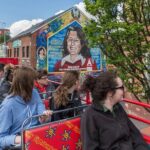
Belfast history moves fast when you’re in a black taxi. I love how the murals are explained in plain language, with guides like Paula or Barry bringing the Troubles to life through stories and old photos/video. I also like that you don’t waste time walking between key sites—you ride in comfort and still get solid photo stops. The main thing to consider is the subject matter: this is political and emotional material, so go in ready to listen (and keep it respectful with your camera).
This is a private tour (max 18 people) in English, typically running about 1 hour 30 minutes to 2 hours depending on timing and traffic. You’ll get a mobile ticket, pickup in central Belfast (and hotel/AirBnb pickup if you request it), and a local driver-guide who knows where to pause and what to point out.
If you’re short on time in Belfast but want the real Belfast—murals, memorial gardens, and the peace lines—you’ll get a lot packed into a tight route. Just note that several stops are brief, so it helps to have a few questions ready before you arrive.
In This Review
- Key things I’d plan around
- Why this Belfast black taxi tour feels different
- Getting your bearings fast: the taxi route and time pressure
- Stop 1: Divis and the Welcome Wall on Falls Road
- Stop 2: International Mural Wall on Divis Street
- Stop 3: The Peace Wall and how it works day to day
- Stop 4: Shankill Road Loyalist murals and the Bayardo Bar Memorial
- Stop 5: Another major Peace Wall section with signatures
- Stop 6: Clonard Martyrs Memorial Garden
- Stop 7 and Stop 8: Back to the Divis International Wall and the Bobby Sands mural
- Stop 9: Garden of Remembrance on the Falls Road
- Stop 10: Shankill Road Memorial Garden at the former Bayardo Bar site
- Stop 11: 56 Sherbrook Cl for murals of armed loyalist paramilitaries
- Price and value: what you’re really paying for
- Who should book this tour
- Final verdict: should you book?
- FAQ
- How long is the Official World Famous Belfast Black Taxi Tour?
- What does the tour cost?
- Is hotel pickup available?
- Where can the tour start, and what times run it?
- What’s included in the tour price?
- Do I have options if I want to go to Titanic Museum or Crumlin Road Gaol after?
- Are there limits on group size and who can join?
Key things I’d plan around
- Falls Road + Shankill Road in one ride: you see both mural traditions and the memorial sites tied to each community.
- Divis Tower and the Divis murals: ex-prisoner painted art paired with the former British observation/sniper history.
- Peace Wall basics you can actually use: where they are, why they exist, how tall they can be, and how gates work.
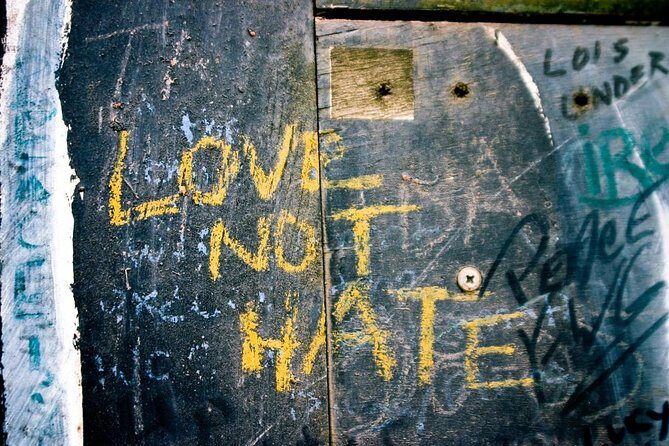
- Photo-ready moments with context: peace gates, Peace Wall signatures, and major murals like Bobby Sands.
- Brief stops, not a long lecture: you’ll get understanding quickly, then you can take photos and move on.
Why this Belfast black taxi tour feels different
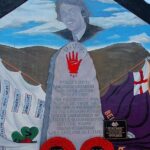
There’s a reason Belfast is known for murals: the walls carry memory in a way that a brochure never can. This tour uses that strength, but it adds two smart tools. First, you get a private black taxi so you cover more ground without tiring yourself out. Second, your guide works the story into what you’re standing in front of, instead of treating murals like decoration.
What I liked most is how guides explain details without turning it into a word puzzle. You’ll hear how murals connect to ex-prisoners, prison protests, civil rights, unrest, and the wider push-and-pull between communities. That kind of framing makes it easier to read the art for what it is: community storytelling, written in paint.
The other big win is balance of viewpoints across the route. You’re not shown only one side’s murals and memorials. You’ll spend time on the Falls Road world of republican murals and gardens, then cross over to the Shankill Road side where loyalist art and memorial markers reflect their own history.
You can also read our reviews of more tours and experiences in Belfast.
- Titanic Belfast Entrance Ticket: Titanic Visitor Experience Including SS Nomadic
★ 4.5 · 3,698 reviews


Getting your bearings fast: the taxi route and time pressure
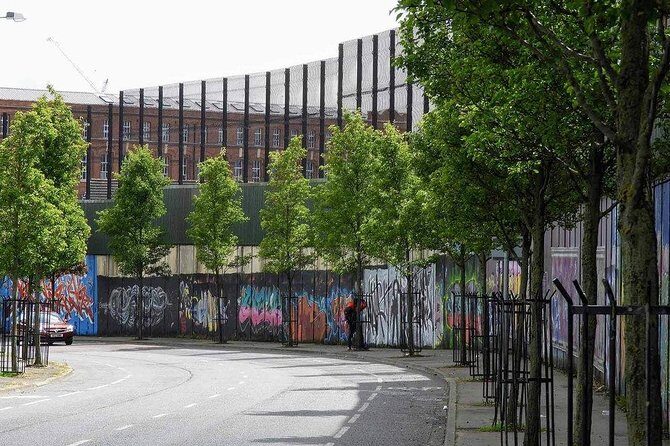
This is not a full-day tour. It’s designed to be efficient, running about 1.5 to 2 hours, with several stops that are around 5 to 15 minutes each. That matters because it changes how you should approach it: don’t expect a deep academic lecture at each wall. Instead, expect quick context that makes the next stop make sense.
The schedule includes multiple start times—9am, 11am, 1pm, 3pm, and 5pm—and you can request pickup from Free Central Belfast, plus hotel/AirBnb pickup if you ask. If you’re doing a tighter itinerary, this kind of timing is helpful: you can often fit it around other Belfast plans.
One more practical note: the tour is in English and you’ll have a mobile ticket, so you can focus on the ride and the stops, not paperwork. Also, there’s a max of 18 people per booking, but since it’s private, it’s mainly just your group moving through the neighborhood.
Stop 1: Divis and the Welcome Wall on Falls Road
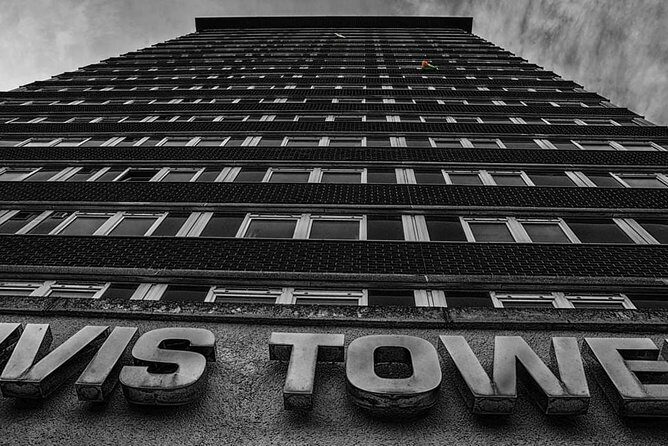
The tour begins near the Welcome Wall at the start of the Falls Road, in West Belfast’s republican area. Your guide points out wall art connected to what’s described as the republican struggle for Irish freedom, and you’ll also see the Divis Tower.
Divis Tower is one of those locations where the details change how you see everything around it. The tower was occupied by the British Army as an observation tower and a snipers nest during the Troubles. Standing there today gives you that odd “this is normal now, but it wasn’t” feeling—then your guide ties it directly to the murals and the stories behind them.
The murals here are painted by ex-prisoners from both sides of the community, and you’ll be shown how the art explains conflict, community strife, civil rights and unrest, and inspiration linked to prison protests. A strong part of the experience is that you’ll also see photographs and video from the 1970s onward while at the exact spots, so the neighborhood doesn’t feel abstract.
Photo tip: have your camera ready before you arrive. The most meaningful images are often tied to specific corners and wall sections.
Stop 2: International Mural Wall on Divis Street
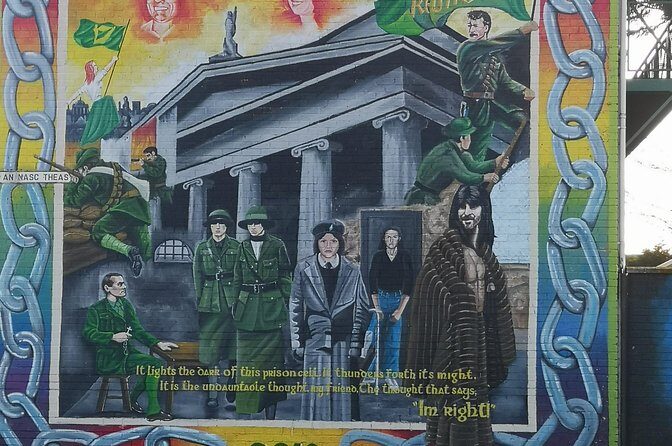
Next up is the International Mural Wall Divis Street, described as the largest outdoor gallery of politically charged art in Western Europe. This is where the tour starts to feel like a global news map, but painted on neighborhood walls.
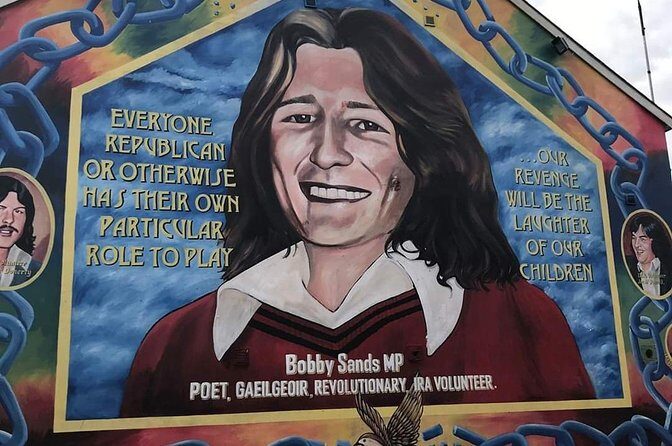
You’ll focus on republican wall art including the Ten Hunger Strikers and the revolutionary icon Bobby Sands (linked to 1981). Your guide also explains the battle involving the Iron Lady—Margaret Thatcher—showing how international political figures and local conflict feed into mural themes.
What I found useful here is the way modern murals are placed alongside older ones. You’ll see additions tied to Palestine/Israel, the George Floyd and Black Lives Matter movement, and also well-known anti-apartheid leadership like Nelson Rolihlahla Mandela. That mix helps you understand murals as living statements, not sealed-in-time history.
You’ll also pause for the Peace Gates photo, and your guide explains why they matter. That matters because the Peace Wall concept you’ll hear about later is already hinted at here: separation barriers can also include controlled openings—daylight access, but closure at night.
Stop 3: The Peace Wall and how it works day to day
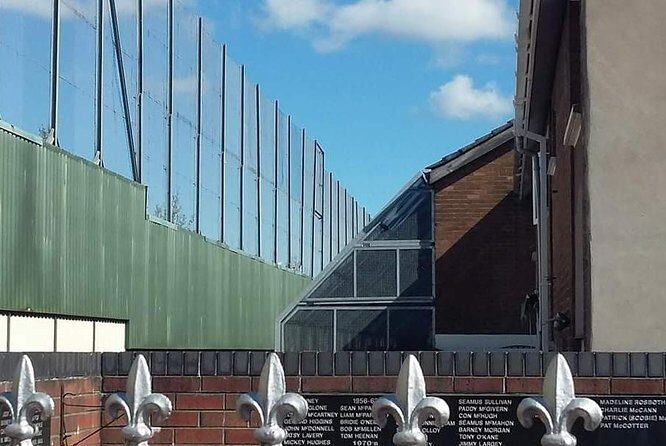
This stop is for the big idea: the peace lines and Peace Walls. Your guide explains that these are separation barriers built at urban interface areas in Northern Ireland, specifically separating predominantly republican/nationalist Catholic areas from predominantly loyalist/unionist Protestant areas.
You’ll get practical facts that keep this from feeling like a vague concept. For example:
- they can be a few hundred yards up to over three miles (5 km)
- they can be made of iron, brick, and/or steel
- they can be up to 25 feet (8 metres) high
- some have gates, sometimes staffed by police, allowing passage during daylight but closed at night
You’ll also hear that while most are in Belfast, peace walls exist in other towns too, including Derry, Portadown, and Lurgan. Even if you’ve heard the term before, this part helps you picture the reality of what these barriers look like and how they function through the day.


Stop 4: Shankill Road Loyalist murals and the Bayardo Bar Memorial
Then the tour moves from the Falls Road mural world to the Shankill Road, often described as the heartland of Ulster Loyalism. Expect loyalist mural styles, flags, and a different set of references—still political, still tied to the Troubles, but told through a different community lens.
Your guide explains themes like King Billy the bonfires and the House of Orange, and you’ll see murals including Stevie “Top Gun.” The stop also includes the Bayardo Bar Memorial, plus pictures of the Queen and UVF paramilitaries.
This is a good place to slow down and notice the difference between what you see and what you’ve been told to expect. The murals don’t just illustrate the past; they signal identity in the present. Your guide’s context helps you read that without turning it into a debate in the street.
Practical photo tip: flags and murals can get blown out by bright daylight. If you can, aim for slightly angled shots that keep the text and faces readable.
Stop 5: Another major Peace Wall section with signatures
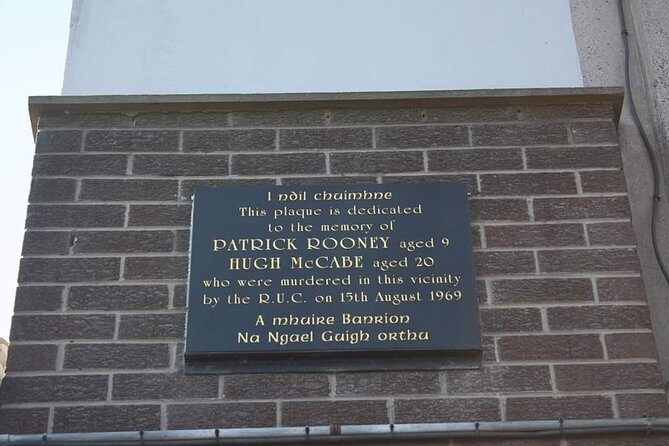
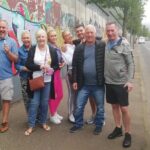
After Shankill Road, you’ll stop at another large Peace Wall section, where your guide points out an important detail: the US President Bill Clinton and the Dalai Lama signed the wall. You’ll also be able to write your name and leave a little message on the wall and take photos for your friends and social media.
That activity can feel small, but it changes the mood. Instead of just being a spectator at a barrier, you’re participating in a shared visitor moment—one that’s still framed by the wall’s real purpose: separation, reduced violence, and the reality of nightly closures.
If you’re the kind of person who likes meaning tied to physical places, this is one of the stops that sticks.
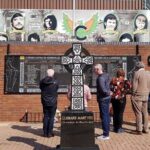
Stop 6: Clonard Martyrs Memorial Garden
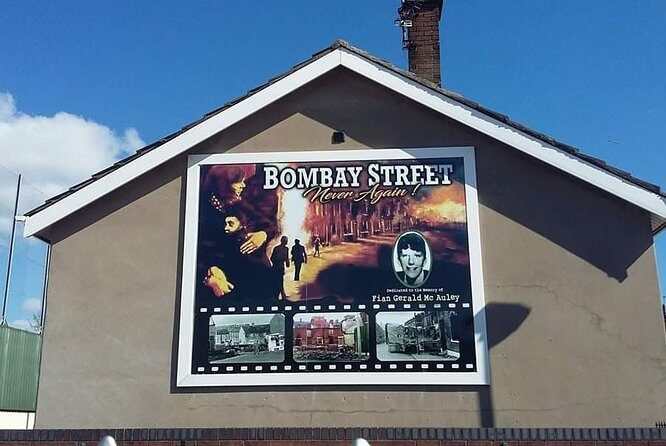
This stop shifts the tone. The Clonard Martyrs Memorial Garden is an Irish republican memorial space on the Falls Road side. Even though the time here is brief, memorial gardens tend to slow your breathing. The focus is less on painting and more on remembrance.
Because the tour is political by design, it helps that there are places where the information is not shouted—just kept in stone and name lists and the quiet weight of a garden setting.
Stop 7 and Stop 8: Back to the Divis International Wall and the Bobby Sands mural
The route returns again to International Wall Murals on Divis Street, which reinforces the scale and variety of the art. If you’re taking photos, this double visit can actually help: you can capture different sections without feeling rushed once you understand the guide’s framing.
Then you’ll go to the World Famous Falls Road and Bobby Sands Mural, at the political wing of Sinn Féin. This is one of the tour’s headline visuals, tied directly to the hunger strike narrative you heard about earlier.
For me, the value here is continuity. You start hearing about Hunger Strikers and Bobby Sands, then you end up at the mural itself, where the meaning becomes physical. It’s easier to understand why the mural world matters when you’ve already been given context at the Divis walls.
Stop 9: Garden of Remembrance on the Falls Road
Next is the Garden of Remembrance, linked to the IRA D Company Garden of Remembrance on the Falls Road. Your guide includes the names of IRA volunteers killed in action.
This is the kind of stop that can be heavy. If you’re uncomfortable with memorial details, it’s still worth knowing that this tour includes them. It’s not only about murals and photos—it’s also about the memorial culture tied to those neighborhoods.
If you want a mental tip: treat it like a museum moment. Look first, then read if you want the context. You don’t have to take everything in at once.
Stop 10: Shankill Road Memorial Garden at the former Bayardo Bar site
On the Shankill side again, you’ll visit the Loyalist Memorial Garden at the site of the former Bayardo Bar. This pairs nicely with the earlier Bayardo Bar Memorial you saw on Shankill Road.
This second Bayardo-related stop matters because it shows how memory is layered across both communities. Instead of one-off markers, there’s a structured way of remembering built into the streetscape.
Stop 11: 56 Sherbrook Cl for murals of armed loyalist paramilitaries
The final mural stop is short but specific: 56 Sherbrook Cl, where you photograph murals of armed loyalist paramilitaries. It’s a quick photo moment, but it closes the loop on the tour’s theme: identity, conflict, and remembrance expressed through public art.
By the time you finish here, you’ve seen how murals can reference individuals, institutions, battles, protests, and later movements—like the Black Lives Matter mural addition—showing that Belfast’s mural language keeps evolving.
Price and value: what you’re really paying for
The listed price is $130.34 per person for a private tour, with duration around 1.5 to 2 hours. That sounds like a lot until you compare what you get: a professional local driver-guide in a dedicated private black taxi, hotel/AirBnb pickup options if requested, and a route designed to cut down walking between scattered sites.
You’re not just paying for transportation. You’re paying for interpretation—someone guiding you to the exact wall spots and connecting them to older photos/video, hunger strike references, the Peace Wall mechanics, and memorial garden meanings. If you try to do this on your own without context, you’ll likely spend more time figuring out where to go and what you’re seeing.
Also, the private format helps. You can ask questions, adjust your photo pace, and keep things respectful without turning your tour into a group shuffle.
Who should book this tour
This is a great fit if:
- you want a high-impact history and culture route in a short time
- you’re serious about murals as storytelling, not background scenery
- you like getting local interpretation from a driver-guide who can answer questions
It may be less ideal if:
- you’re sensitive to politically charged content and memorial details
- you prefer long, slow stops with lots of time per location (this tour moves with taxi efficiency)
Final verdict: should you book?
I think you should book this tour if you’re in Belfast for a limited number of hours and you want the mural-and-peace-wall story explained with enough context to make the visuals click. The private taxi format is a real quality-of-life upgrade, and the presence of guides like Paula and Barry shows that this isn’t just a route—it’s interpretation done with care.
Go in ready to listen, keep your photos respectful, and ask your guide what you don’t understand. If you do that, you’ll leave with a much clearer sense of why these walls still matter.
FAQ
How long is the Official World Famous Belfast Black Taxi Tour?
It runs about 1 hour 30 minutes to 2 hours.
What does the tour cost?
The price listed is $130.34 per person.
Is hotel pickup available?
Yes. Pickup is offered from Free Central Belfast, and you can request free Belfast Hotel/AirBnb pickup and drop-off.
Where can the tour start, and what times run it?
Tour start times include 9am, 11am, 1pm, 3pm, and 5pm. You’ll be asked for your preferred pickup time and point.
What’s included in the tour price?
Included items are a local professional driver tour guide, Belfast black taxi, and free pickup/drop-off if requested. The tour is also private.
Do I have options if I want to go to Titanic Museum or Crumlin Road Gaol after?
Yes. Drop-off after Titanic Museum or Crumlin Road Gaol is available for an extra £10 paid directly to your guide.
Are there limits on group size and who can join?
The tour allows a maximum of 18 people per booking. Children must be accompanied by an adult, and service animals are allowed.
You Might Also Enjoy

More Tours in Belfast

More Tour Reviews in Belfast
- Titanic Belfast Entrance Ticket: Titanic Visitor Experience Including SS Nomadic
★ 4.5 · 3,698 reviews