REVIEW · BELFAST
Belfast history of terror & mural 1 hr express private taxi tour
Book on Viator →Operated by Belfast famous black taxi tours · Bookable on Viator
Black cabs teach Belfast faster than guidebooks. This private 1-hour express tour uses the city’s famous black taxi to move you through west Belfast’s hardest stories, with stops at murals and peace lines that people still argue about today. I love that the narration isn’t textbook stuff—it’s passed on by a driver who lived the Troubles from the inside—and I love how the murals are explained as politics you can see, not just street art.
I also like the way the route mixes sides without turning it into a shouting match. When I hear names like Danny or Tony in the mix, you can tell you’re in capable hands: they balance what happened with what it means now, and they’re ready for your questions as you roll through the back streets. One possible drawback: this is heavy territory, so if you want a soft-focus history break, you may find the topic matter intense even though the tour is short.
In This Review
- Key things that make this tour worth your hour
- Why Belfast’s black taxi is the smart way to see murals and peace lines
- How the tour keeps the politics understandable (and not just loud)
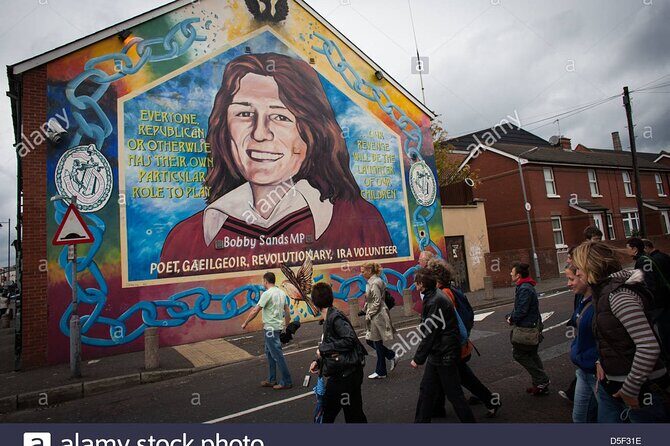
- Stop 1: Bobby Sands Mural on the Falls Road
- Stop 2: Peace lines and the idea of separation
- Stop 3: Shankill Road—loyalism’s heartbeat on an old street
- Stop 4: Divis flats, towers of the Troubles, and the long aftermath
- Stop 5: The International Mural Wall on Divis Street
- Italian craftsmanship, peace talks, and why walls matter beyond art
- A jail built in the 1800s: prisoners, escapes, and the long shadow
- Price and logistics: is $164.24 per person good value?
- Who this tour suits best (and who might want a different plan)
- Practical tips for making the most of your hour
- Should you book Belfast history of terror & mural tour by black taxi?
- FAQ
- How long is the Belfast history of terror & mural private taxi tour?
- What does the tour cost?
- Is pickup included, and where does it start?
- Is pickup available from airports, train stations, or cruise ports?
- Is the tour private?
- Are there admission tickets needed for the mural stops?
- Do children need to be accompanied?
- Are service animals allowed?
- What is the cancellation policy?
Key things that make this tour worth your hour
- A black taxi route built for moving quickly through Belfast’s “interface” areas
- Murals treated as political messages and territorial markers, not decoration
- Falls Road and Shankill Road covered in one tight run
- Peace lines explained plainly, including why they exist
- Stops that include Bobby Sands Mural, Divis flats, and an International mural wall
- Private group feel with pickup from within 1 km of Belfast City Hall
Why Belfast’s black taxi is the smart way to see murals and peace lines
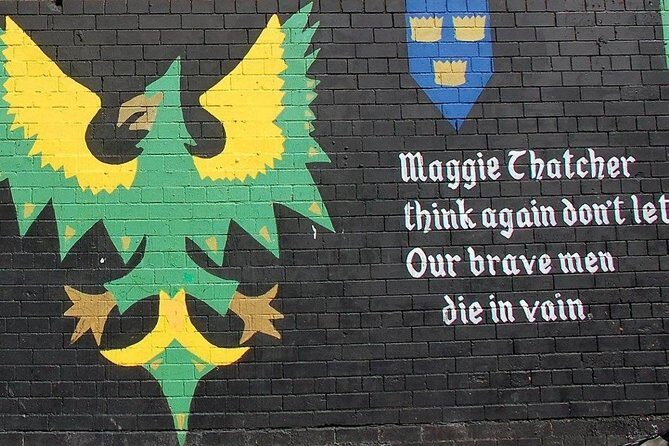
In Belfast, a mural is never just a mural. The paint is tied to identity, territory, grief, and pride. If you only stroll around on your own, you’ll see the art, sure—but you’ll miss the context that makes the images make sense, or at least make more sense than random graffiti.
That’s where the black taxi approach helps. You’re not stuck reading everything at walking speed while buses and cars move past you. Instead, your driver gives you the storyline as you ride, then you get a few minutes at each stop to look and absorb. It’s fast, but not rushed in the way some tours feel.
You also get the big advantage of being able to ask follow-ups on the spot. When your guide has lived the Troubles—literally seating communities through bullets and bombs—your questions don’t sound like curiosities. They sound normal.
You can also read our reviews of more private tours in Belfast
How the tour keeps the politics understandable (and not just loud)
You’re dealing with a city where people still measure loyalties and history in real time. So the best version of this tour is the one that explains without lecturing.
The guides here lean into lived experience and plain explanation. The Falls Road vs Shankill Road contrast is a big part of the story, but you’re not forced into a script. You can ask what a symbol means, why a particular mural is placed where it is, or how the peace process changed everyday life.
There’s also a practical side to this that you’ll appreciate. Peace walls and interface areas can feel confusing if you’re unfamiliar with the geography. Having a guide who’s used to navigating the streets under that kind of tension helps you keep your bearings fast.
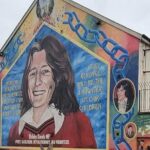
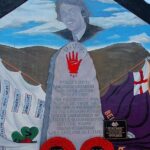
Stop 1: Bobby Sands Mural on the Falls Road
You start in west Belfast on the Falls Road, a street whose name is loaded with meaning. It runs from Divis Street in the city centre out toward Andersonstown, and it’s strongly associated with the republican community. Even the language matters: it’s tied to Irish meaning related to enclosures, and people often refer to it simply as the Falls Road.
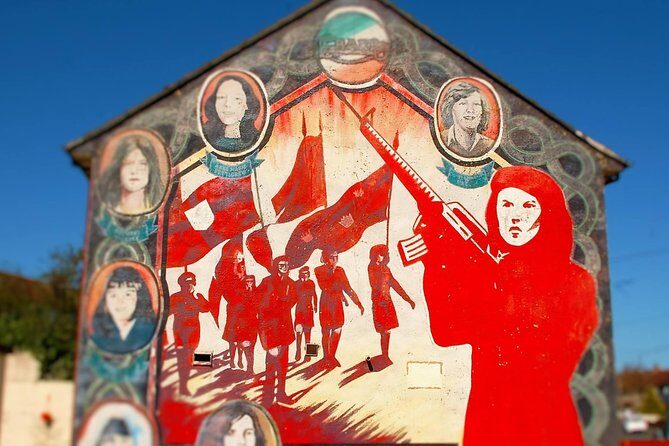
The Bobby Sands mural is a defining image on this stretch. It marks the area as a homeland of sorts for the Provisional IRA story. You’ll get enough context to understand why people see the mural as remembrance and identity, not as a provocation for the sake of it.
How long you stop is short—about 10 minutes—so I’d treat this as a “read the scene” moment. Take in the imagery first, then let your driver connect the dots. If you try to memorize every detail at street level, you’ll miss the point: the mural is doing political work on the wall.
A small consideration: because the subject is so charged, you might want to go in with a calm headspace. This isn’t a quick photo op where you can ignore the meaning.
Stop 2: Peace lines and the idea of separation
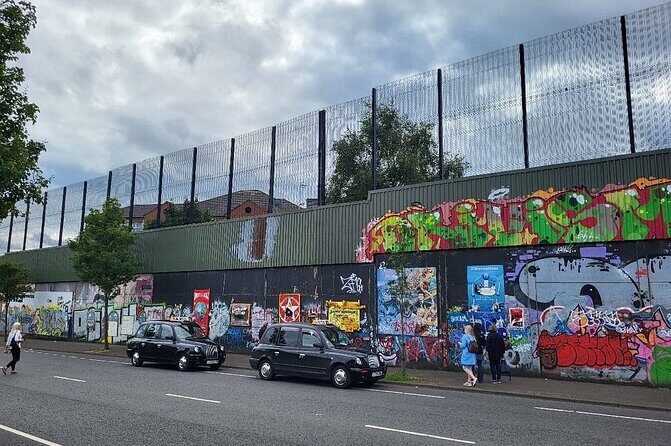
Next you hit the Peace Wall area—also called peace lines. These aren’t just short dividers. They can stretch for a few hundred yards or over three miles, depending on the neighborhood. And they’re built specifically at “interface” points: where predominantly Nationalist/Catholic and predominantly Unionist/Protestant areas meet.
The stated purpose is straightforward: minimize inter-communal violence. In plain terms, they exist because people didn’t trust each other enough to share space safely.
This stop is valuable because it reframes what you’re seeing. If you only treat the walls as physical barriers, you’ll walk away stuck on the sight. The tour helps you see the walls as a negotiation tool—one that came out of fear, violence, and then the attempt to keep calm in daily life.
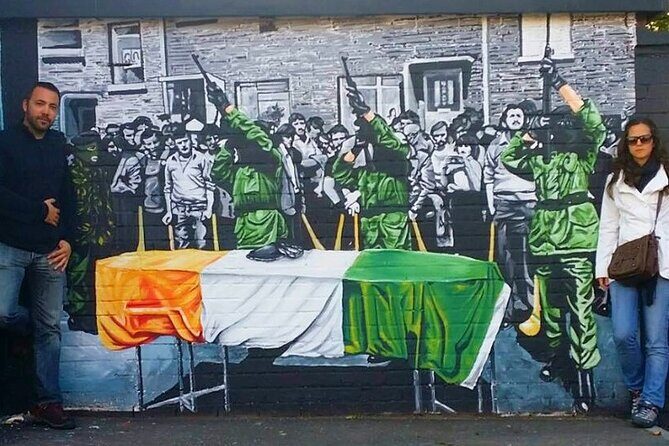
You’ll also encounter a remembrance-focused element created by the local community to remember IRA volunteers and civilians who died in these side streets. That kind of memorial adds another layer: even with peace walls present, grief doesn’t disappear on schedules.
Stop 3: Shankill Road—loyalism’s heartbeat on an old street
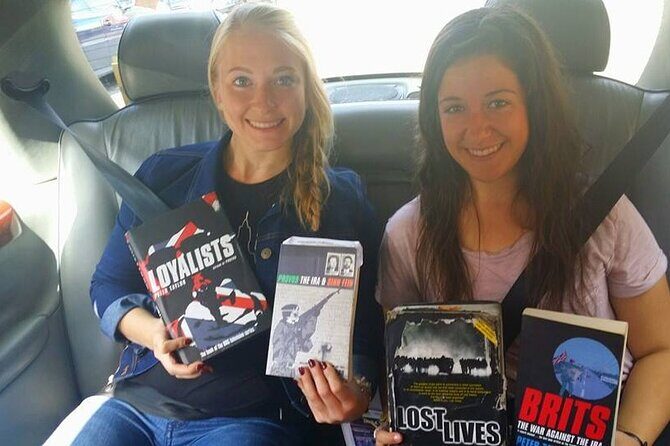
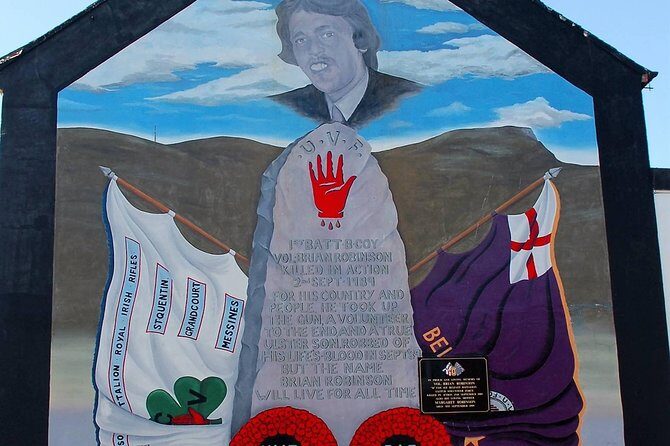
Then you cross into the Shankill Road world. This road is described as one of the oldest in Belfast, dating back to 455 AD, which is an attention-grabber on its own. But what matters on the ground is what the street symbolizes: it’s tied to loyalism, including the UVF and UFF formations.
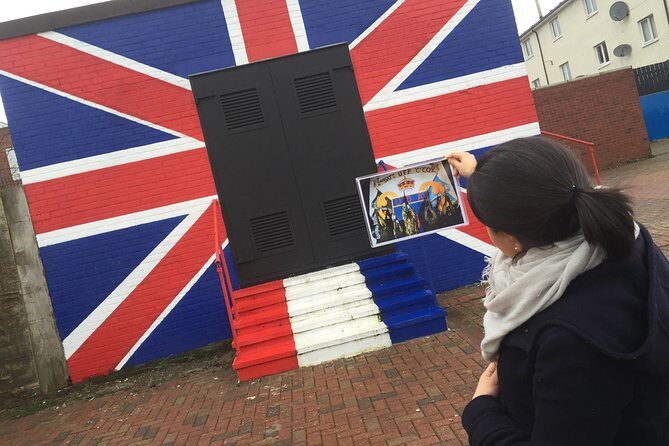
Your guide will also explain the British history and the formation of Northern Ireland. That part matters because it anchors the murals and symbols in something bigger than personal stories. Without that context, you can end up treating everything as slogans. With it, you start seeing the storyline.
This stop is also brief—around 15 minutes—so I suggest this approach: don’t try to decode everything visually. Instead, listen for how your guide connects street history to the modern political map.
If you’re the type who gets uncomfortable with politics, this is the spot to be extra gentle with yourself. The tour doesn’t hide reality, but it also tries to keep the conversation explainable.
You can also read our reviews of more historical tours in Belfast

Stop 4: Divis flats, towers of the Troubles, and the long aftermath
Divis is one of those places where the architecture itself feels like a history book. Divis flats are notorious with The Troubles and have seen gun battles in the area. The tour focuses on the connection between the built environment and the conflict.
You’ll hear that the tower block was occupied by the British Army starting in the 1970s, and that occupation extended until 2007, with the top three floors in that military use. That kind of detail helps you understand why residents would remember the space differently than someone seeing it for the first time.
Your stop here is short—about 5 minutes—but it’s a strong contrast to the mural stops. Murals are deliberate, painted messages. Flats like Divis are a physical reminder of occupation, pressure, and the way communities can get shaped by what outsiders do.
A consideration for some visitors: it can feel heavy to look at housing blocks when you know they’re tied to violence. If you’re sensitive, take a moment before moving on and let the guide finish the explanation.
Stop 5: The International Mural Wall on Divis Street
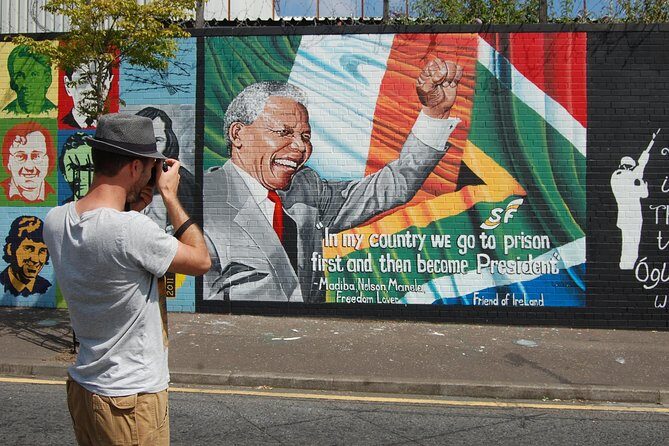
Next you’ll see an International mural wall—a huge surface featuring murals of different countries and their stories about injustice. The examples mentioned include Palestine and Cuba, and the overall theme is making the world notice their struggle for freedom.
I like this stop because it shows the murals aren’t only about Belfast. It’s easy to think murals here are purely local propaganda. This section broadens the picture and suggests a wider conversation about power, oppression, and solidarity.
Still, don’t assume it’s neutral. Even when the subject shifts far beyond Northern Ireland, the same logic applies: murals mark views and identity.
This stop is short—about 5 minutes—so again, use it for focus. Look for the style and message patterns. Then let your guide connect how international themes get painted into Belfast’s visual culture.
Italian craftsmanship, peace talks, and why walls matter beyond art
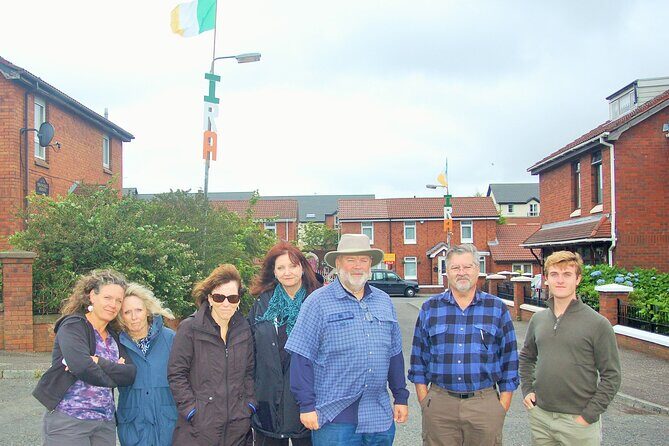
After the international work, you’ll get a stop tied to remarkable construction and a major political milestone. Here’s what the tour information points to: the craftwork was created by Italians and local men, built over 100 years ago, and it marks the start of secret peace talks between Gerry Adams (Sinn Fein) and John Hume (SDLP).
That’s a big deal, because it connects murals and memorial streets to actual negotiation history. It also explains why visitors come to Belfast not only for the murals, but for the spaces where talks and decisions happened.
If you ask your guide, you can request a stop to show you inside at least part of this site. That’s one of the ways the tour earns its money: you don’t just see surfaces—you get the story of the place.
I’d treat this as your “pause and process” moment. Even if the tour is short, this is the stop where the meaning starts to click into something more than symbolism.
A jail built in the 1800s: prisoners, escapes, and the long shadow
The final major theme stop is a jail built in the 1800s. The tour info says it housed some famous prisoners during The Troubles and saw successful escapes. It also notes it functioned as a hanging jail into the 1960s.
This is not a light topic, so I’m glad the format stays respectful: quick stops, clear narration, and no sensational showmanship. The value here is how it completes the story loop. You’ve seen the messages on walls; now you see the system that shaped lives under conflict.
If you’re worried about this turning into a grim experience, don’t. The tour doesn’t ask you to stare at tragedy. It frames the jail in terms of political conflict and the consequences for real people.
Price and logistics: is $164.24 per person good value?
At $164.24 per person for about 1 hour, this tour isn’t a budget bargain. But the value comes from what you’re buying: private taxi access plus a driver-guided, interpretive route through neighborhoods where context matters.
You’re also getting pickup from Belfast city center within 1 km of Belfast City Hall, which saves time and stress. And because it’s private, you don’t have to match pace with strangers who aren’t asking the questions you care about.
The one logistical wrinkle: pickup from airports, train stations, or cruise ports isn’t included. If you need it, there’s a surcharge paid on the day in cash only. If that affects you, plan ahead so you aren’t scrambling mid-trip.
In short: if you want a quick, guided, high-context introduction to Belfast’s murals and peace walls, this price can make sense. If you prefer to wander slowly and don’t care about political context, you might find cheaper options. But you’d be trading away the key part that makes this tour work.
Who this tour suits best (and who might want a different plan)
This tour is a great fit if you:
- want a fast, guided way to understand Falls Road and Shankill Road
- care about what murals mean, including the symbols linked to the IRA and UVF
- like asking questions and getting answers from people who lived it
- want a private experience in a short window
It might be less ideal if you:
- want a light, carefree Belfast sightseeing loop
- get overwhelmed by emotionally heavy political topics
- dislike content that requires careful attention rather than casual sightseeing
Practical tips for making the most of your hour
- Bring questions. This tour format works best when you don’t just watch.
- Keep your priorities in mind: the stops are short by design, so decide what you want to understand most.
- If your pickup starts outside the Belfast city centre radius, expect a cash surcharge for that extra distance.
- Use the mobile ticket you’ll receive for a smooth start.
And one more tip: look at the murals first, then listen. It’s the reverse of how most people do it. The meaning lands better.
Should you book Belfast history of terror & mural tour by black taxi?
I think you should book it if your Belfast trip includes even one moment where you want to understand the city’s conflict-era memory in a direct, on-the-street way. The black cab format saves time, and the driver-led perspective gives you context that you can’t easily piece together alone.
If you’re visiting for only a day or you want something focused instead of “see a bit of everything,” this fits neatly. You get Falls Road, peace lines, Shankill Road, Divis, an international mural focus, and a sense of how negotiations and punishment shaped the landscape of daily life.
Just go in knowing the topic is serious. The hour moves fast, but the stories don’t. For the right kind of traveler, that’s exactly the point.
FAQ
How long is the Belfast history of terror & mural private taxi tour?
It lasts about 1 hour.
What does the tour cost?
The price is $164.24 per person.
Is pickup included, and where does it start?
Pickup is included from Belfast city center within 1 km of Belfast City Hall.
Is pickup available from airports, train stations, or cruise ports?
Pickup from those locations is not included. A surcharge applies on the day in cash only.
Is the tour private?
Yes. It’s a private tour/activity, and only your group participates.
Are there admission tickets needed for the mural stops?
The listed stops for the tour are marked as ticket-free.
Do children need to be accompanied?
Yes. Children must be accompanied by an adult.
Are service animals allowed?
Yes. Service animals are allowed, and the tour is near public transportation.
What is the cancellation policy?
You can cancel for free. Cancel at least 24 hours in advance for a full refund.
You Might Also Enjoy
More Private Tours in Belfast

More Tours in Belfast



More Tour Reviews in Belfast
- Titanic Belfast Entrance Ticket: Titanic Visitor Experience Including SS Nomadic
★ 4.5 · 3,698 reviews