Belfast has a way of leaving marks. This Walls and Bridges walk uses famous landmarks and the scarred parts of the city to explain the Troubles without turning it into a sad movie montage. You’ll get context, photos, and plain talk, from a Belfast native.
I especially love how the tour balances big-city sights with serious local reality. Two standouts for me are the Peace Wall stop (where you get time to look closely and understand what you’re seeing) and the storytelling at First Presbyterian Church, which adds nuance to the usual us-versus-them version of events.
One consideration: this is a walking tour with graphic content, and it spends real time on violence and division. If that kind of subject matter will hit too hard, think carefully before you book.
In This Review
- Key things to know
- Why Belfast’s Walls and Bridges tour feels different
- Getting oriented fast: the City Hall start
- Dan George sculpture and the city-centre bridge to context
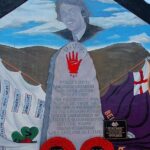
- International Mural Wall on Divis Street: art with political memory
- Peace Wall photos with real-world explanations
- Albert Memorial Clock Tower: the leaning landmark and film ties
- Cathedral Quarter stroll and Belfast’s changing street life
- First Presbyterian Church: history that complicates the usual divide
- Belfast Entries: the alleyways most people miss
- Private small-group format: what undivided attention really means
- How much walking and how to prepare for the tough parts
- Price value: what $33.29 buys you in a 3-hour walk
- Who should book this tour, and who should skip it
- Should you book Belfast Troubles Tour: Walls and Bridges?
- FAQ
- How long is the Belfast Troubles Tour: Walls and Bridges?
- Where does the tour start and end?
- What language is the tour offered in?
- Is it appropriate for children?
- Is admission included for the stops?
- Is there free cancellation?
Key things to know
- Small-group private format (max 16) helps your guide keep everyone on track and answer questions.
- Headsets are used so you can hear the guide clearly as you move through the city.
- You’ll slow down for photos at the Peace Wall, not just pass it like a bus stop.
- You get more than Troubles facts, with stops that show Belfast’s civic life and everyday culture too.
- The tour ends near Rosemary Street, so you can keep exploring right after.
Why Belfast’s Walls and Bridges tour feels different
Most history tours are mostly about buildings. This one is about how people live with what the city has been through. The name Walls and Bridges is not just wordplay. You feel the idea of walls in the places where communities were physically separated. You feel the idea of bridges in the guide’s steady push toward understanding instead of stereotypes.
What makes it work is the pacing and the mix. You start with major Belfast landmarks that many visitors recognize, then you shift into the memorial walls, alleyways, and churches that explain how the Troubles shaped daily life. It is not only political trivia. It’s social history you can walk through.
You can also read our reviews of more tours and experiences in Belfast.
- Titanic Belfast Entrance Ticket: Titanic Visitor Experience Including SS Nomadic
★ 4.5 · 3,698 reviews

Getting oriented fast: the City Hall start
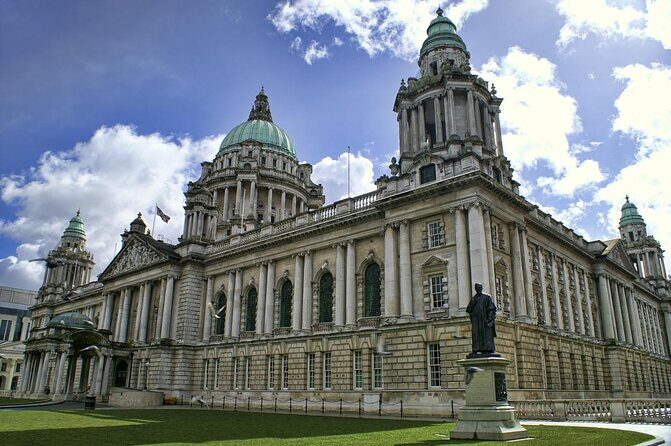
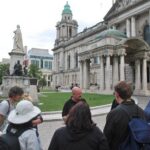
Your tour kicks off at Belfast City Hall, one of the city’s big statements. The dome alone reaches 174 feet, and inside you get a quick look at different types of Italian marble. The stained glass also gets its moment, and the guide points out what it’s communicating about Belfast at the time it was made.
I like this opening because it gives you a baseline. Before you see walls, you see how the city wanted to present itself: confident, ornate, civic-minded. Even if you only catch a slice during the stop, it helps your brain switch from Troubles-only to a full-city view.
Practical tip: wear shoes you trust. You’ll cover a decent amount of ground in a few hours, and City Hall is where your walking rhythm starts.
Dan George sculpture and the city-centre bridge to context
Right after City Hall, there’s a modern sculpture by Dan George in the city centre. It uses a traditional Celtic design and ties into Belfast’s engineering, industry, and community identity. It’s a short stop, but it matters.
Why? Because it keeps the tour from becoming one long grim thread. Belfast is not only a conflict story. It’s also a working city, shaped by craft, manufacturing, and people who built things long before and after the worst years of the Troubles. This is where the tour quietly starts steering you toward the bridge part of the title.
If you like symbolism, take a minute here. Look at how the design references Celtic roots while still being distinctly modern.
International Mural Wall on Divis Street: art with political memory
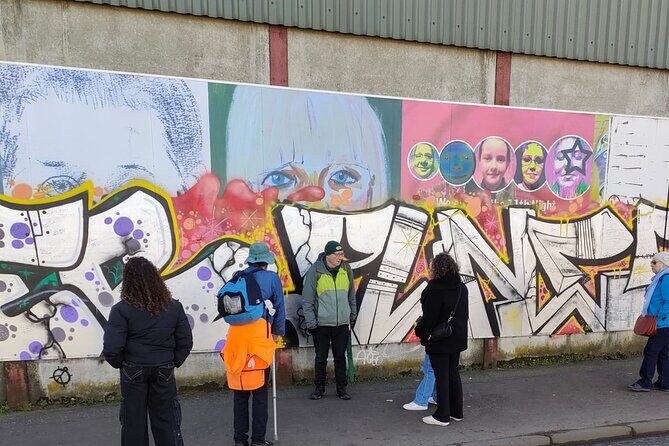
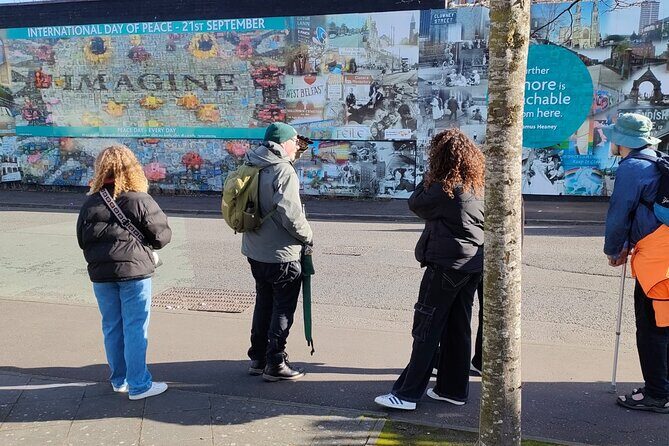
Next comes the International Wall of Murals near the Peace Walls on Divis Street. This is where you’ll see how public art can hold history that official plaques never fully capture. The murals are tied to the wider International Wall of Murals system and connect directly with the Peace Walls area.
You’re not just looking at colorful surfaces. The guide frames the murals in relation to identity, storytelling, and who gets to be remembered. The stop is short, but it’s timed well so you don’t burn out before the heavier stuff.
Practical tip: have your camera ready, but also pause and let your guide finish the key points. Some mural details make more sense once you understand the surrounding context.
Peace Wall photos with real-world explanations
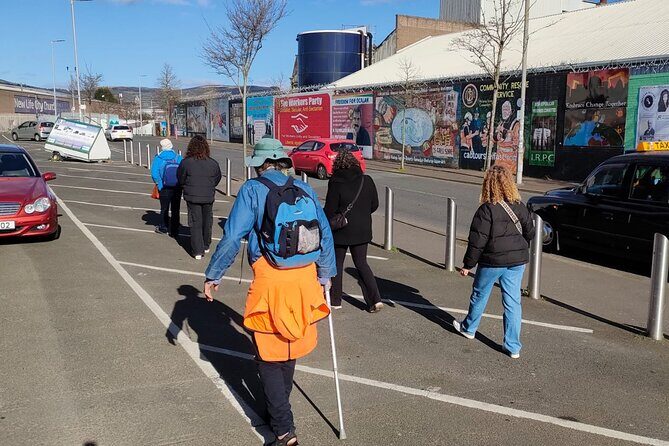
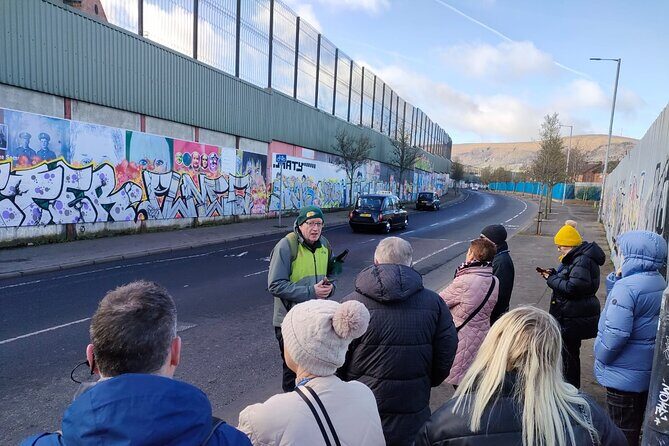
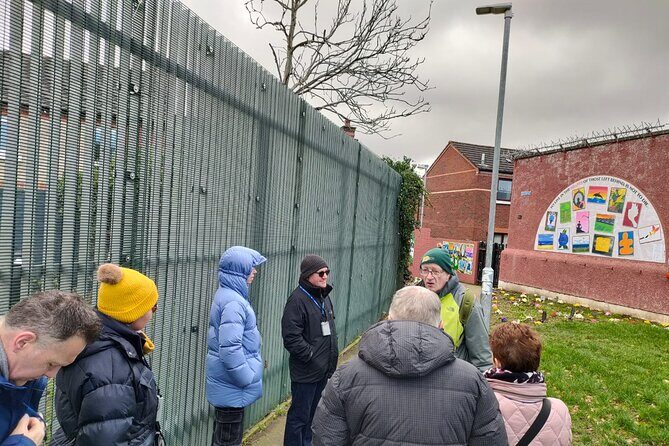
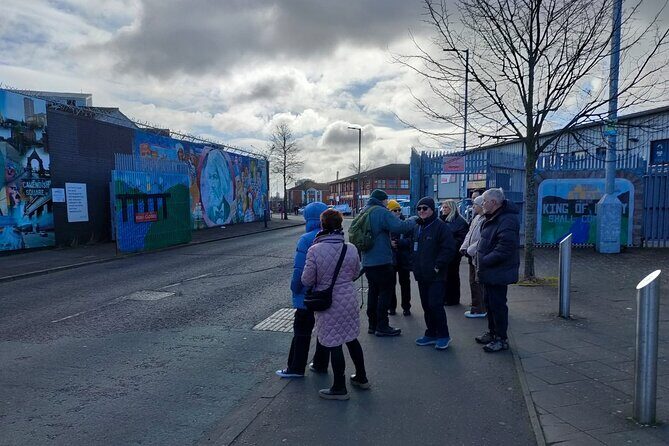
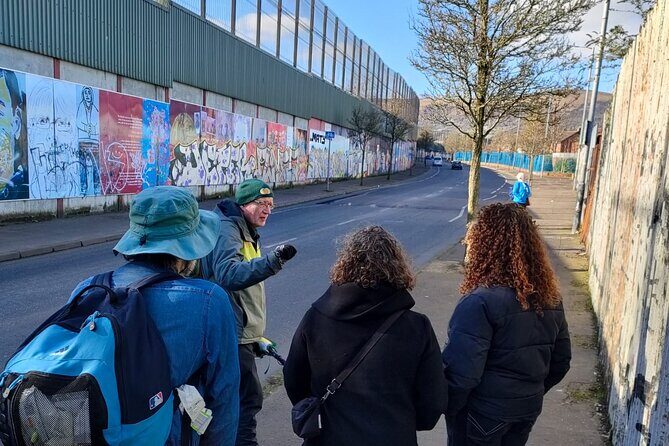
This is the heart of the tour. The Peace Wall divides communities in Belfast, and it’s about 16 metres high, topped with mesh intended to stop petrol bombs. You get time to photograph and examine the walls, with detailed explanations while you’re there.
I appreciated that the guide doesn’t treat the wall like a spooky landmark. You learn what it was for, why it exists where it does, and what kind of daily reality it created. Reviews reflect the same feeling: you come away with a more grounded understanding, not just an image.
Important note: this is also where the tour can feel emotional and serious. The tour includes graphic content, and the guide may reference violence and its impact plainly. If you’re sensitive to that, plan your day so you have space afterward to decompress.
Photo tip: the wall is tall, so don’t just shoot from far away. If there’s a safer vantage point offered by your guide, use it to capture the scale and the mesh topping.


Albert Memorial Clock Tower: the leaning landmark and film ties
Then you shift to a different kind of landmark: the Albert Memorial Clock Tower. It stands 113 feet tall and is known for leaning about 4 feet to the perpendicular. Your guide also connects the tower to the spot where Belfast was established and notes the statue of Prince Albert.
There’s a fun cultural link too: the tower was used in the noir film Odd Man Out, starring James Mason. This is one of those stops that works for both history lovers and regular sightseers. You get facts, but you also get why the landmark has stuck in popular culture.
I find leaning towers make people smile a bit, even in a serious tour. That little human reaction can help you keep going without numbing out.
Cathedral Quarter stroll and Belfast’s changing street life
After the landmark-heavy stops, you head into the Cathedral Quarter. This area is known for colorful murals, lively street life, pubs and restaurants, and old-school cobbled stones that give it a more authentic street feel than many modern districts.
The tour uses this time to show Belfast after the worst years: music venues, street culture, and a city that keeps finding new ways to gather. Reviews also hint that the guide ties the past to a more hopeful view of Belfast’s future—tech, tourism, and manufacturing show up in the narrative as part of that shift.
This stop is useful even if you think you only care about the Troubles. It stops the tour from ending in despair. You get a sense of where everyday life goes after a city carries trauma.
First Presbyterian Church: history that complicates the usual divide
The tour then goes to First Presbyterian Church. It dates from 1783, and the guide walks you through what you can see once you cross the threshold. In the church, you hear that John Wesley preached from the pulpit. You also learn about the church’s elliptical shape and how members supported civil and religious freedoms.
This stop is one of the most praised parts of the tour because it challenges the simplified version of conflict. The guide connects the church’s story to the bigger theme of how communities overlap and conflict doesn’t always fit tidy boxes.
Also, you’ll have time to explore and take photos. It’s a calmer moment compared with the wall, and it’s a good place to ask your guide questions. A lot of the best Tours end up being about dialogue, not just facts.
Belfast Entries: the alleyways most people miss
The final stretch is the Belfast Entries, historic passageways you might not know exist unless you’re shown. Your guide leads you through them past sights of revolution, intrigue, and pubs.
These alleyways matter because they change your scale. Streets feel wide and public. The Entries feel intimate, like the kind of space where news travels fast and communities overlap in ways bigger roads hide. It’s a fitting ending after you’ve seen physical walls. You finish with the idea that Belfast is full of hidden connections, not only barriers.
If you like a walk that ends with atmosphere, this part delivers.
Private small-group format: what undivided attention really means
This is a private tour, and it keeps the group size to a maximum of 16. That matters because it’s not just a lecture you can tune out. Your guide can correct your understanding as you go, and you’re more likely to get answers to questions without derailing the whole schedule.
I also like that guides often use humor alongside seriousness. From the named guides you may encounter—Arthur (including Arthur Magee) and Steve in particular—the pattern is consistent: they mix personal, lived perspectives with clear historical framing. The goal is balanced understanding, not rallying you to one side.
And yes, headsets help. You’re moving, traffic noise exists, and the guide is not talking into the wind. You can keep your attention on what they say instead of constantly asking people around you to repeat things.
How much walking and how to prepare for the tough parts
This is a walking tour with a moderate fitness level and a minimum age of 14. It’s not marketed for children, and the material includes graphic content. That combination is key: you should expect this to be weighty, not a light stroll.
What to do before you go:
- Wear comfortable shoes with good grip.
- Bring a layer. Belfast weather can shift quickly.
- If graphic violence details are hard for you, mentally plan a quiet hour afterward.
Also, consider how you like to learn. This tour is narrative-driven. If you prefer pure museum-style facts or want long pauses to read independently, you might want to keep your expectations realistic about a guided walking format.
Price value: what $33.29 buys you in a 3-hour walk
At about $33.29 per person, you’re paying for a guided walking tour that lasts roughly 2 hours 40 minutes to 3 hours. The value is less about seeing seven separate landmarks and more about what a good guide adds: the why behind the where, and the human scale of understanding conflict without turning it into a contest.
This pricing also includes what you need to experience key stops efficiently—many stops list free admission. One church stop includes entry. In a city like Belfast, where travel times and separate ticketing can stack up, a bundled guided route can feel like a smart use of your limited time.
The best part for me is that the tour aims to leave you with perspective. Not everyone leaves saying they liked the content, but many leave feeling they understand the city better than they did when they arrived.
Who should book this tour, and who should skip it
Book this if:
- You want the Troubles explained in a way that includes local context, not only dates.
- You’re comfortable walking and listening for a few hours.
- You want to see beyond the walls—City Hall, the leaning clock tower, the Cathedral Quarter, and the Entries keep the city picture complete.
- You like guides who bring both seriousness and humor.
Skip or think hard if:
- Graphic details and violent subject matter will be too upsetting.
- You’re looking for a casual sightseeing loop with no heavy history.
- You need an accessible, low-walking route. This one is moderate fitness by design.
Should you book Belfast Troubles Tour: Walls and Bridges?
If you’re choosing one “must-do” walking experience in Belfast that connects iconic landmarks to the city’s difficult past, I’d book it—especially if you value a local guide’s direct perspective. The Peace Wall stop is worth it for the scale and the explanation, and the ending at the Belfast Entries gives you a last sensory impression that feels distinctly Belfast.
Just go in prepared. This tour doesn’t hide the hard parts, and it asks you to listen with an open mind. If you can handle that, you’ll come away with a clearer sense of how Belfast became Belfast, and how people keep building bridges after walls.
FAQ
How long is the Belfast Troubles Tour: Walls and Bridges?
Plan for about 2 hours 40 minutes to 3 hours.
Where does the tour start and end?
The tour starts at Belfast City Hall (BT1 5GS) and ends at Rosemary St (BT1 1QB), near the First Presbyterian Church.
What language is the tour offered in?
It’s offered in English.
Is it appropriate for children?
The minimum age is 14, and the tour is not aimed at children. It includes graphic content.
Is admission included for the stops?
The schedule lists free admission for key stops, and First Presbyterian Church is marked included.
Is there free cancellation?
Yes. You can cancel up to 24 hours in advance for a full refund. After that cutoff, refunds are not available.
You Might Also Enjoy
More Tours in Belfast

More Tour Reviews in Belfast
- Titanic Belfast Entrance Ticket: Titanic Visitor Experience Including SS Nomadic
★ 4.5 · 3,698 reviews