REVIEW · BELFAST
The Troubles and iconic award winning taxi 2hr private cab tour
Book on Viator →Bookable on Viator
Two neighborhoods, one city, hard memories. This 2-hour private taxi tour gives you a focused walk through The Troubles using political murals, sites of imprisonment, and the lasting peace walls. I like that you get a real professional driver-guide (and not just a playlist) plus long mural time for photos and context. One thing to consider: if you’re sensitive to smoke, there’s at least one report of cigarette smell in the cab, so you may want to ask about it upfront.
You’ll start around Belfast City Hall, then roll out to key Republican and Loyalist streets, including stops like Bobby Sands, Shankill Road, and Crumlin Road Gaol, plus the International Mural Wall and the Peace Wall. It’s rated 4.9 with strong recommendations, and the guides highlighted in past outings include people like David, Ricky, Sean, and Gerard, praised for storytelling and for trying to keep the picture fair.
In This Review
- Key highlights worth your time
- Why a 2-hour private taxi tour fits The Troubles in Belfast
- Price and value: what $120.64 gets you
- Getting started from Belfast City Hall (and avoiding pickup headaches)
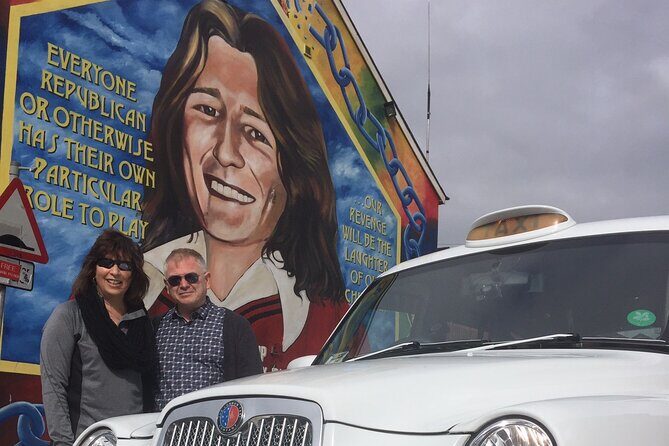
- Stop 1: Bobby Sands Mural on Falls Road
- Stop 2: Divis Flats and the start of the Falls Road murals
- Stop 3: Clonard Monastery, Catholic faith and peace talks
- Stop 4: Shankill Road murals and the Loyalist story
- Stop 5: Crumlin Road Gaol and its prison tunnel
- Stop 6: International Mural Wall on Divis Street
- Stop 7: The Peace Wall where you can write your name
- Stop 8: Falls Road Library and the 1981 hunger strike context
- Stop 9: Shankill Graveyard and mural photos above and below
- What makes the guides matter: stories, balance, and how to steer the conversation
- The small “real world” issues to consider before you book
- Who should book this Belfast taxi tour, and who might skip it
- Should you book The Troubles and iconic award winning taxi 2-hour private cab tour?
- FAQ
- How long is the taxi tour?
- What does the tour cost?
- Is the tour private?
- Is pickup included?
- Do you pick up from airports, train stations, or cruise ports?
- What language is the tour in?
- Are admission tickets included for every stop?
- Are children allowed?
- Are service animals allowed?
- Is there free cancellation?
Key highlights worth your time
- Mural-first route through Republican and Loyalist neighborhoods with photo stops
- Stops tied to real events, including the 1981 hunger strike and political imprisonment
- Both sides on the same day, with the tour bouncing between Falls Road and Shankill Road areas
- Peace Wall moments, including the chance to write your name
- Crumlin Road Gaol viewing a prison site connected to political prisoners and a tunnel route
Why a 2-hour private taxi tour fits The Troubles in Belfast
The Troubles can feel overwhelming when you land in Belfast and see a city that’s still shaped by conflict. The smart move is to use a guide who can point at murals, buildings, and street patterns and explain what they meant to the people living there. In a private cab, the pace stays workable, and you can ask questions without feeling like you’re interrupting a bigger bus full of people.
What I like most is the way this tour uses everyday street scenes as your classroom. You’re not just watching history on a screen. You’re standing in the neighborhoods where messages were painted to be seen, argued with, and carried forward. And because the route includes both Loyalist and Republican areas, you get a broader sense of why the divide is still visible in 2026.
You can also read our reviews of more private tours in Belfast
Price and value: what $120.64 gets you
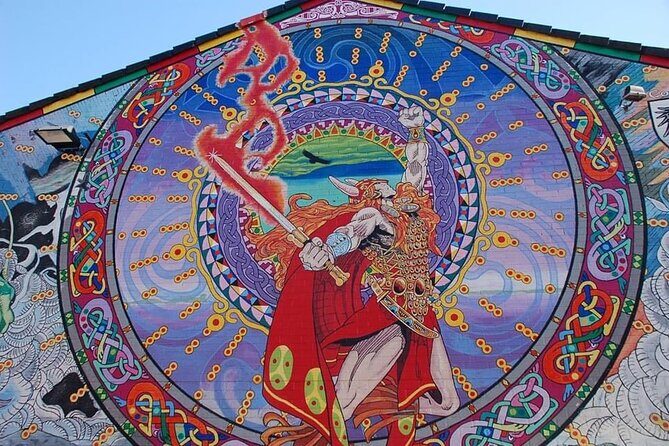
At $120.64 per person for about 2 hours, this is not a cheap “drive-by” tour. But you’re paying for three things that matter in Belfast: a private car, a guide who can talk history on the move, and enough time at the murals and sites to make it meaningful.
The route spends time where the story lives. For example, Shankill Road gets a longer stop than the quick photo points, and the Peace Wall is treated like a real moment (with time to write your name). That’s where value shows up: not in the number of stops, but in how long you’re allowed to stand, look, and ask.
Also, the average booking window is around 36 days in advance, which tells me you’re likely booking a slot that’s in demand—so plan on reserving early if your dates are fixed.
Getting started from Belfast City Hall (and avoiding pickup headaches)
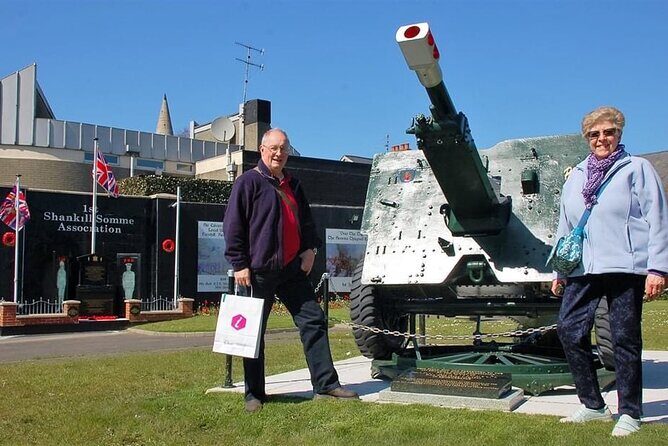
Pickup is included from central Belfast, specifically within a 1 km radius of Belfast City Hall front gates. If you’re coming from a cruise, this one doesn’t offer pickup because the port area is several miles outside the city center; the cruise shuttle bus drops you outside Visit Belfast, across the street from City Hall, and you can meet there.
If you’re arriving by airport or train station, pickup isn’t included, but there’s a surcharge paid on the day in cash only. That’s the kind of detail that can slow you down if you assume all pickups are included, so I’d read that part carefully before you travel.
Stop 1: Bobby Sands Mural on Falls Road
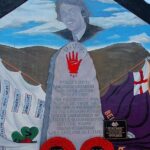
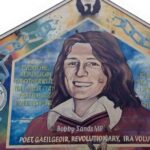
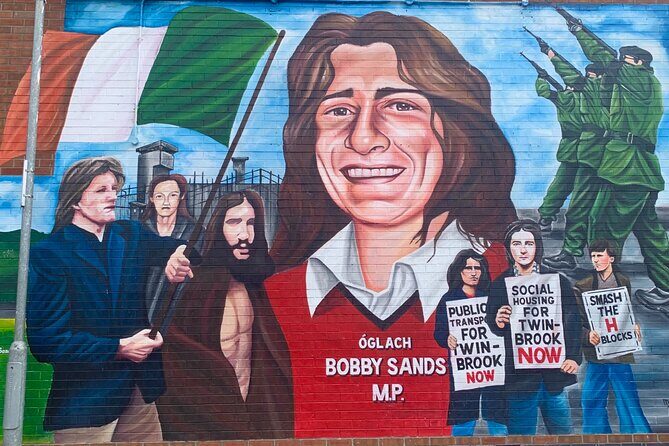
Your first major mural stop is the Bobby Sands Mural on the Falls Road. This is described as the heart of Republicanism and tied to the birthplace of the Provisional Irish Republican Army. Expect a detailed history framed from a Republican point of view, with time to get photos of one of the most recognizable images connected to the conflict.
Why this works early in the day: it sets the tone and gives you language for what you’re going to see next. Murals aren’t random street art here; they’re political statements meant to be read by people walking past every day.
One practical note: the admission ticket for this stop is marked as not included. If you want zero surprises, budget time to handle any ticketing on-site.
Stop 2: Divis Flats and the start of the Falls Road murals
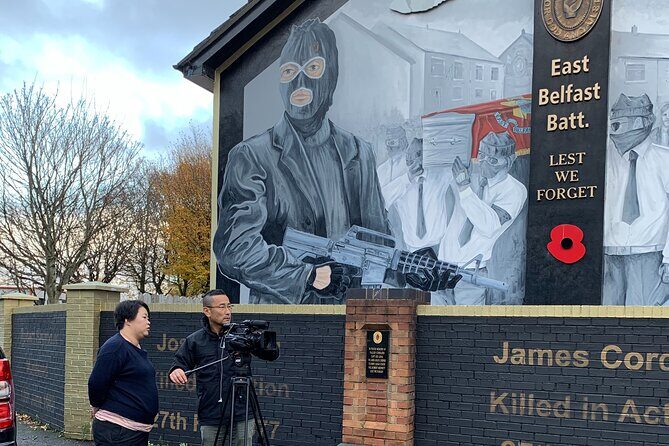
Next comes Divis Flats, close to the start of the Falls Road area. The welcome mural there is part of the larger message of the neighborhood, and your guide explains the British army presence on the top floors and the idea of using local people as human shields. You’ll also hear about the burning of the Falls Road in 1969 by Loyalists, plus a longer sweep of Irish history.
This is a shorter stop, but it’s heavy in meaning. Even if you don’t know much going in, you’ll leave with a clearer sense of why the murals focus on identity, survival, and political grievance.
Just like Bobby Sands, admission for this stop is marked as not included, so again, don’t assume everything is covered.

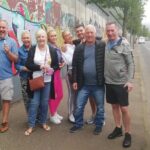
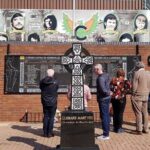

Stop 3: Clonard Monastery, Catholic faith and peace talks
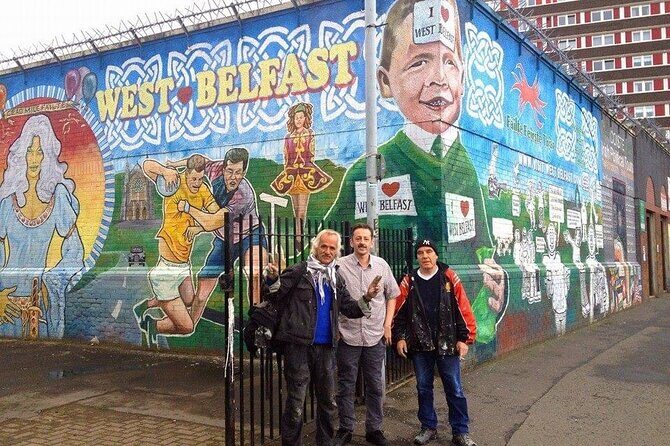
The tour shifts to Clonard Monastery, a significant site for many people in west Belfast. You’ll also hear that it hosted secret peace talks between Gerry Adams and John Hume. Even if you know names but not context, a stop like this gives you the missing link between ideology and the human process of negotiation.
Time here is listed as about 10 minutes, so you’re not getting a long inside visit. Instead, you’re getting a guided orientation: what this place represents to the community and why it’s part of the larger Troubles story.
Stop 4: Shankill Road murals and the Loyalist story
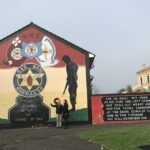
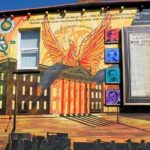
Then you cross into Shankill Road, the heart of the Loyalist community in Belfast. The tour frames Shankill Road as tied to organizations like the UVF and UDA and even links the community’s story back centuries. The main focus, though, is what you can actually see: murals painted by locals on family homes, with your guide spelling out the themes and why they mattered to people who lived with the conflict day after day.
This is the longest stop on the day (about 40 minutes), which is exactly what you want for mural watching. You’ll have real time to take photos, read details, and ask questions about what’s on the walls and how it connects to loyalty to the British crown.
Admission for Shankill Road is marked free, which makes this one easier on your budget.
Stop 5: Crumlin Road Gaol and its prison tunnel
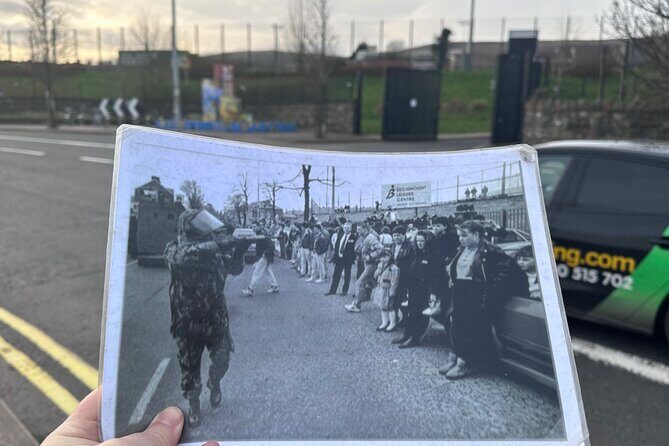
At Crumlin Road Gaol, you’ll see a prison built in the 1800s that housed many notorious political prisoners. It’s also described as a hanging jail right up to the 1960s. One of the standout details here is a tunnel under the road that connects the gaol to the Crumlin Road court house, a reminder that the conflict wasn’t just political speeches and street paint; it was also the machinery of justice and punishment.
This stop is brief (about 10 minutes), so think of it as guided orientation rather than a full museum-style visit. Admission is marked free, so you can spend your money on time and questions rather than ticket fees.
Stop 6: International Mural Wall on Divis Street
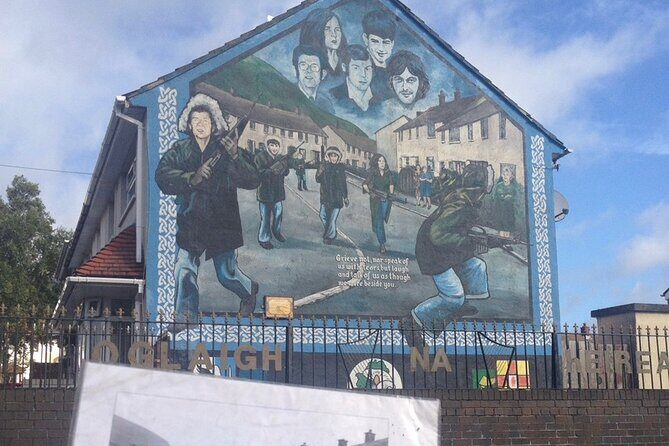
The route then includes the International Mural Wall on Divis Street, with over 40 murals that change monthly. This part is different in mood: the murals are used to support political struggles and pressed peoples around the world, with examples given like Palestine, Kurdish, and Cuban.
Why it matters: it shows you that Belfast’s conflict didn’t stay local. The neighborhoods here look outward, and street art becomes a way of showing solidarity.
Admission for this stop is marked as not included, so check on-site if any tickets apply.
Stop 7: The Peace Wall where you can write your name
Next comes the Peace Wall, built in 1969 to keep peace, and still present today. You’ll be told that there are more than 30 through the city, and this is your chance to write your name on the wall. That small act turns a symbol into something personal without needing a long lecture.
The time here is about 10 minutes. It’s short, but it’s the kind of moment where you’ll feel the weight of the city’s geography: walls aren’t abstract here. They’re part of walking routes, daily sightlines, and the visual map of who is where.
Admission is marked free.
Stop 8: Falls Road Library and the 1981 hunger strike context
At Falls Road Library, you’ll stop for a more focused political-history pairing. You’ll see a Bobby Sands IRA volunteer MP mural on the side of Sinn Fein headquarters and also find a reference point opposite a former Black and Tans base. Your guide provides in-depth history of the 1981 hunger strike, which is one of the most defining episodes of the Troubles era.
This is about 15 minutes, with the emphasis on meaning rather than a long browse. Admission is marked free, so this is another “great use of time” stop.
Stop 9: Shankill Graveyard and mural photos above and below
The final mural-heavy stop is Shankill Graveyard, split into upper and lower areas with murals that depict Protestant loyalty to the British crown. You’ll have time to take photos and to compare visual themes across the neighborhood divide, especially when you pair this with earlier Falls Road stops.
This one is about 15 minutes and marked free. For me, it’s the kind of end point that sticks, because it reminds you conflict isn’t only about battles and politics. It’s also about memory, grief, and how communities mark identity across generations.
What makes the guides matter: stories, balance, and how to steer the conversation
The strongest praise tied to this tour is how guides bring it to life through personal storytelling and guided explanation. Names that come up in past experiences include David, Ricky, Sean, Gerard, and even a note about Ciara stepping in when things went wrong with scheduling and matching the booked tour length.
Two things I think you should use to your advantage:
- Ask where the guide thinks the divide still shows up today. You’re not just collecting facts; you’re learning how the present grows out of the past.
- Request an equitable, two-sided framing early if you want it. Even when the first stop leans Republican in perspective (like Bobby Sands and Divis Flats), a well-run guide should connect you to the Loyalist sites too, so you leave with more than one lens.
If you get a guide who is strongly personal, that can be powerful. It can also be the moment to ask questions that test for balance, like what the murals mean to the people who disagree with them.
The small “real world” issues to consider before you book
This tour earns a 4.9 rating with a very high recommendation rate, so issues seem uncommon. Still, based on the kind of operational hiccups that show up in the real world, I’d keep these in mind:
- Cab comfort: one report mentioned an overpowering cigarette smell. If that’s a dealbreaker for you, say so when you confirm.
- Scheduling mix-ups can happen: there was an account of a late pickup and a confusion about tour length, later corrected by the owner with an extended tour. That sounds like a one-off, but it’s a reminder to build in a small time buffer on travel days.
The payoff is that when guides are on form, the storytelling is the highlight. This is a tour where the guide’s voice, pacing, and willingness to answer questions can make the difference between seeing murals and actually understanding why they exist.
Who should book this Belfast taxi tour, and who might skip it
Book it if you want an efficient, guided way to understand The Troubles through what you can see right now: murals, peace walls, prison sites, and neighborhood landmarks. It’s also a great first Belfast tour if you’re staying in the city center and want context without spending your whole day hunting addresses.
You might skip it if you’re looking for a light, purely sightseeing-style day. This is built around conflict and memory, and the guide’s explanations include details about violence and political imprisonment.
It’s also a solid fit for people who like street-level history—think photos, walking-to-standing moments, and getting answers in real time.
Should you book The Troubles and iconic award winning taxi 2-hour private cab tour?
If you’re trying to understand Belfast beyond the postcard version, this is a strong choice. The route is structured around the clearest visual markers of the Troubles: political murals, sites linked to imprisonment, and the Peace Wall. The guide factor matters here, and the best signals point to guides like David, Ricky, Sean, and Gerard delivering story-driven context with an effort toward fairness.
I’d book it if you’re comfortable with history that’s emotional and direct, and if you can handle the idea that some stops may involve tickets not included. If you’re sensitive to smoke, message ahead and ask about the vehicle.
FAQ
How long is the taxi tour?
It’s listed as about 2 hours.
What does the tour cost?
The price is $120.64 per person.
Is the tour private?
Yes. It’s a private tour/activity with only your group participating.
Is pickup included?
Pickup is included from Belfast city center within a 1 km radius from Belfast City Hall.
Do you pick up from airports, train stations, or cruise ports?
Pickup is not included for airports, train stations, and cruise ship ports. A surcharge is mentioned for airports and train stations, paid in cash on the day. Cruise pickup is not offered, though the cruise shuttle bus drops you outside Visit Belfast across from City Hall.
What language is the tour in?
The tour is offered in English.
Are admission tickets included for every stop?
No. Some stops are marked as admission ticket not included (including Bobby Sands Mural, Divis, and the International Mural Wall), while other stops are marked as free (including Shankill Road, Crumlin Road Gaol, Peace Wall, Falls Road Library, and Shankill Graveyard).
Are children allowed?
Children must be accompanied by an adult.
Are service animals allowed?
Yes, service animals are allowed.
Is there free cancellation?
Yes. Free cancellation is available up to 24 hours in advance for a full refund.
You Might Also Enjoy

More Private Tours in Belfast

More Tours in Belfast


More Tour Reviews in Belfast
- Titanic Belfast Entrance Ticket: Titanic Visitor Experience Including SS Nomadic
★ 4.5 · 3,698 reviews