REVIEW · BELFAST
Express Terror and Peace 90 min Private Belfast Cab /Taxi Tour
Book on Viator →Bookable on Viator
Belfast has two stories, told side by side. This private black cab tour gives you an easy route through the neighborhoods where conflict and reconciliation are still visible in murals and memorial walls. It’s a fast way to understand Belfast’s history and politics without getting lost in the geography.
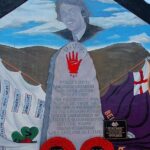
I love two things most: you cover more ground than you can on foot, and you get to see the murals that shape how people tell this city’s story, including the Bobby Sands area. It’s history you can point at, not just read about.
The main consideration is emotional weight. You’ll be close to sites linked to the Troubles, including prisons and hunger strike history, so this is best if you’re ready for a serious theme.
In This Review
- Key highlights worth planning for
- A Black Cab That Keeps the Story Moving
- Divis Flats: The Falls Road Starting Point
- Divis Street International Mural Wall: Messages That Keep Updating
- Bombay Street: Where 1969 Repercussions Took Shape
- Falls Road Library: The Bobby Sands and 1981 Hunger Strike Focus
- Clonard Monastery: Secret Peace Talks and the Ringing of Memory
- Peace Wall: 1969 Origins and What People Write on It
- Crumlin Road Gaol to Shankill Road: Jail History, Then Loyalist Memory
- Shankill Graveyard: Murals You Can Photograph With Context
- Price and Pickup Rules for a Smooth Day
- Who This Tour Is Best For
- Should You Book This Private Belfast Cab Tour?
- FAQ
- How long is the Express Terror and Peace private cab tour?
- Is this tour private or shared?
- What’s included in the tour ticket?
- Where does the pickup happen?
- Do you pick up from airports or train stations?
- Do you pick up cruise ship passengers?
- What language is the tour in?
- Can children join the tour?
- What is the cancellation policy?
Key highlights worth planning for
- Private cab pacing so you can move between neighborhoods without splitting up
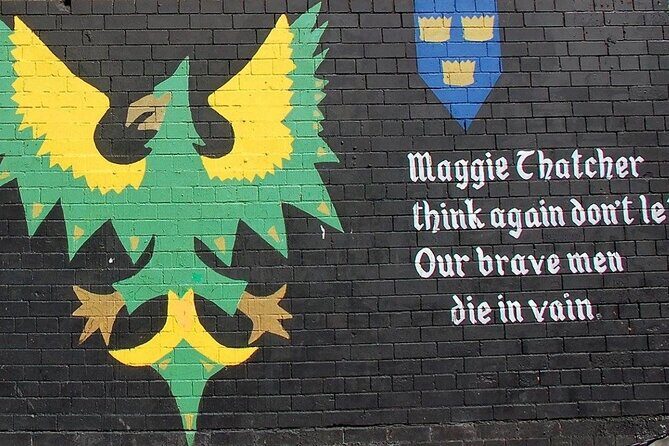
- Mural-focused stops including the Bobby Sands mural and the Divis Street mural wall
- Troubles-to-peace sequence that connects old flashpoints to later reconciliation sites
- Clonard Monastery peace talks connection, including the fact it was bugged
- Peace Wall context about why the walls are still there and what people write on them
- Two historic communities on one route from the Falls Road side to Shankill Road and its murals
A Black Cab That Keeps the Story Moving
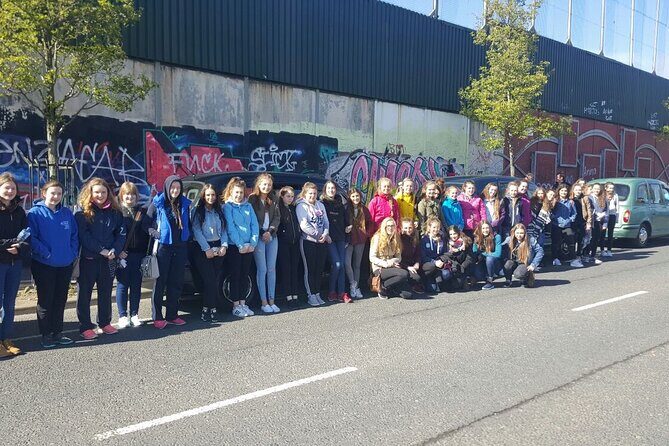
This is the kind of tour that works especially well in Belfast, because the city is shaped by neighborhoods that feel distinct from each other. Riding in a taxi means you’re not guessing how to link the sites, and you’re not limited to what you can walk in a couple hours.
What I like about the format is the pace. The stops are short—often around ten to fifteen minutes—so you spend less time in long transit gaps and more time at the exact places where the story shows up. In a city where symbols matter, that time structure is practical.
The private setup also helps. One group means your guide can tailor the flow to what you’re most curious about—history, politics, murals, or the peace process—without everyone else pulling you off track.
And if you want something more personal than a big group van, this hits that sweet spot. The taxi feels like a local way to see Belfast, not a school field trip.
You can also read our reviews of more private tours in Belfast
Divis Flats: The Falls Road Starting Point
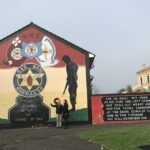
Your first stop is Divis, at the start of the mouth of the notorious Falls Road. This matters because the Falls Road is one of the places where the Troubles became visible in a big way. The area connects to riots in 1966, and it also ties to the British Army presence that continued for decades, up to 2007.
From the curb, you might think it’s just another Belfast housing area. But the guide framing changes how you see it. You start to understand that these streets are not just backdrops—they’re part of the political map. When conflict lasts long enough, the architecture and the location start holding the memory.
One practical point: the stop is brief. You’ll get just enough time to orient yourself and absorb the context, then move on. That’s a benefit if you like momentum. It can feel like a lot to process if you’re not mentally prepared for the intensity of the history being discussed.
Divis Street International Mural Wall: Messages That Keep Updating
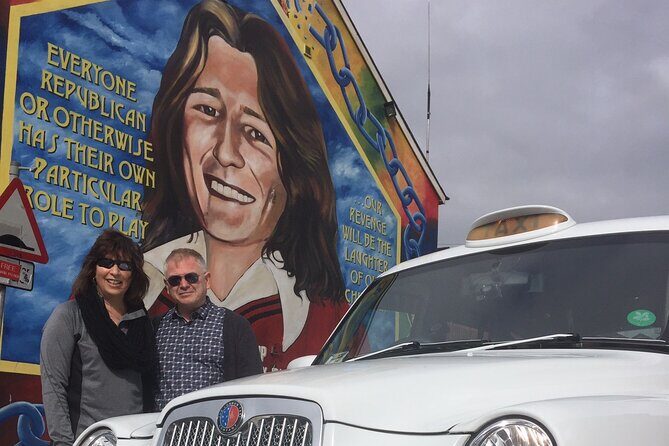
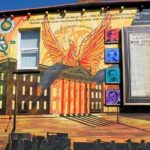
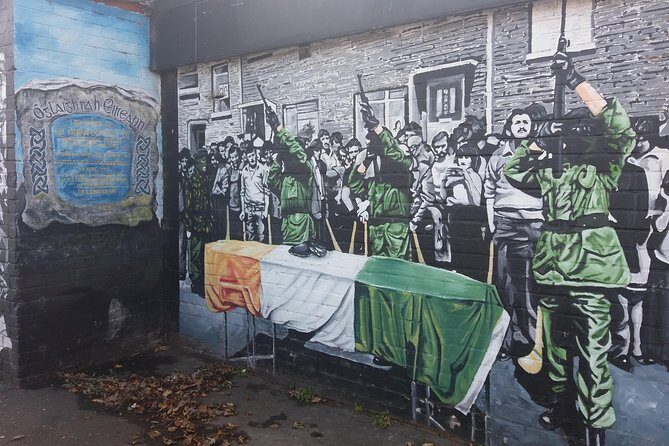
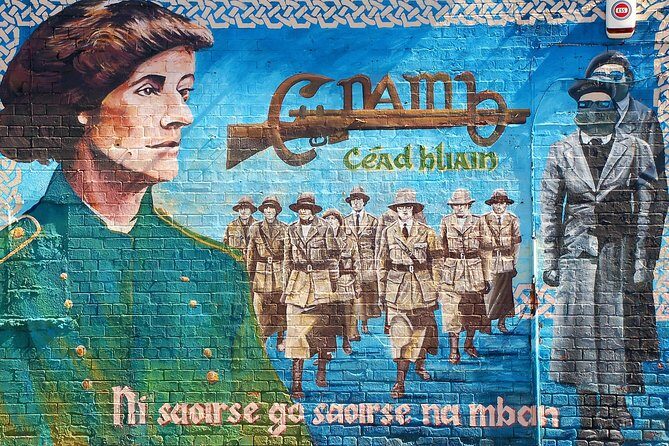
Next comes the Divis Street International Mural Wall, a famous stretch with over sixty murals that keep changing over time. You’ll see references that reach far beyond Northern Ireland, with themes linked to places like Nelson Mandela, Ukraine, and Palestine.
This is one of the most useful stops on the route because it shows how Belfast’s mural tradition isn’t only about local grievances. It’s also a language for global solidarity and political commentary. The wall is like a public bulletin board where people try to make sense of the world they live in.
It also helps you understand why mural-watching is more than a photo stop. The murals are often built to argue for a particular reading of events—sometimes highlighting two sides to the story. That’s why they can feel emotionally loaded even when the artwork style is bold or even beautiful.
If you like street art, this will satisfy you quickly. If you’re new to Belfast history, this wall can be your bridge into the rest of the day, because it connects art to meaning.
Bombay Street: Where 1969 Repercussions Took Shape
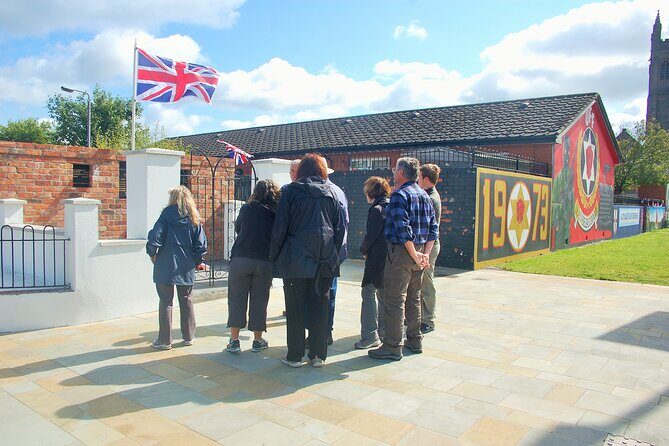
Then you shift to Bombay Street. This street is tied to the official birth of the Provisional Irish Republican Army, with roots traced to 1969.
The key context here is displacement and burning during those events. The area is described as coming out of ashes after large numbers of people were displaced and their homes were burned by police and loyalist forces. That’s heavy material, but the point of the stop is to connect why groups formed and why narratives hardened.
You might feel the difference between this stop and the Divis wall. The mural wall is about ongoing commentary; Bombay Street is about a specific turning point that led to later cycles of action and reaction.
Short on time, yes. But the stop works because you’re not just learning names. You’re learning how Belfast’s conflict moved from politics into lived, local consequences—street by street.
Falls Road Library: The Bobby Sands and 1981 Hunger Strike Focus
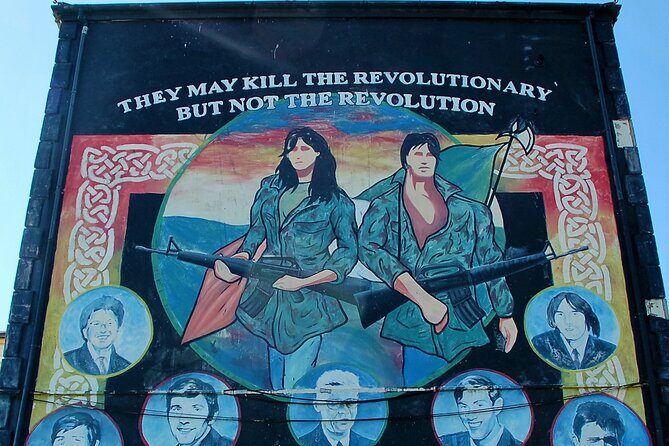
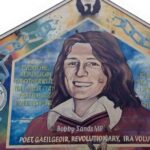
At the Falls Road Library area, the tour homes in on Bobby Sands MP and IRA volunteer history. The mural detail here is important, because it’s not a random wall painting—it’s described as the most famous mural tied to this library setting.
The guide also talks through the 1981 hunger strike. That’s one of the moments people still reference when discussing how the Troubles shaped public opinion, recruitment, and international attention.
This stop is a reminder that Belfast’s murals and memorial sites often connect to very specific people and very specific dates. If you’ve only read general overviews, this kind of stop puts a human face on the timeline.
Because the time is limited, you’ll want to listen closely for the story beats: who the figure was, what the hunger strike represented, and how the site fits into the broader narrative. If you miss a chunk, it’s easy for the meaning to slide past.

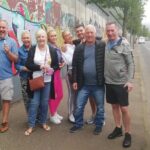
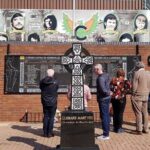

Clonard Monastery: Secret Peace Talks and the Ringing of Memory
Clonard Monastery is where the tone begins to shift toward peace. This stop is tied to secret peace talks between Gerry Adams and John Hume. It’s also described as later being discovered that MI5 had bugged the monastery.
That combination hits two big truths about conflict and reconciliation. Peace talks don’t happen in a vacuum. They happen under surveillance, under pressure, and inside communities that have their own traditions and loyalties.
Even the altar detail adds texture. The altar is described as made up of local women’s wedding rings. That kind of detail matters because it turns a large political process into something you can picture: ordinary people leaving part of their lives behind for a church space that later hosted talks.
The stop lasts about fifteen minutes. It can feel quick, but the value is in how it changes what the day means. You stop thinking only about violence and you start seeing negotiation, strategy, and community faith in the same frame.
Peace Wall: 1969 Origins and What People Write on It
Next is the Peace Wall. These massive walls were first put up in 1969 by the British Army and still remain today throughout the city. That alone is a strong detail: peace here doesn’t mean everything disappeared. It means barriers stayed while people tried to change the future.
The tour also points out that people write quotes for peace on the wall, including the mention of presidents and stars, plus tourist-written messages. It turns the wall into a kind of evolving memorial space.
This stop is where you can feel the tour’s central theme: fear and reconciliation exist at the same time in Belfast. You’re not just hearing a timeline. You’re watching how a physical structure can continue telling a story even after a battle ends.
If you’re visiting with kids or you’re sensitive to heavy topics, this is one of those places where it helps to step back and focus on the peace messages written along the wall. It keeps the emotion from turning into overload.
Crumlin Road Gaol to Shankill Road: Jail History, Then Loyalist Memory
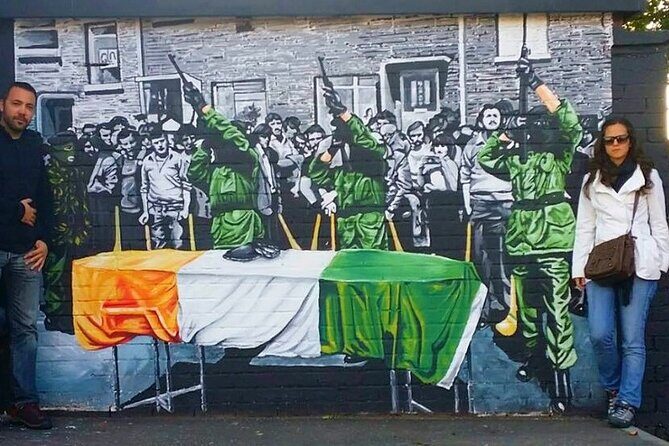
After the Peace Wall, the route includes Crumlin Road Gaol and Court House. This site is built in the 1800s and is described as a hanging jail up to the 1960s. It also notes IRA successful escapes and RPG attacks during the Troubles.
That’s a big shift: from murals and walls to the mechanics of punishment and security. When you consider the rest of the tour, it starts to feel like a full loop—politics turning into confrontation, confrontation turning into imprisonment, and imprisonment shaping later stories people tell.
Then you move to Shankill Road, which is split into lower and upper sections. The guide connects the road to long history, dating back to 445 AD, and also links it to the birthplace of UVF and UFF.
The day’s structure helps here. You’re not only seeing one side of Belfast’s conflict. You’re seeing how each side has its own identity, commemorations, and public symbols.
If you visit close to July, the guide notes you might see one of the notorious bonfires. Even without that seasonal event, this stop gives you a sense of how local traditions still carry political meaning.
Shankill Graveyard: Murals You Can Photograph With Context
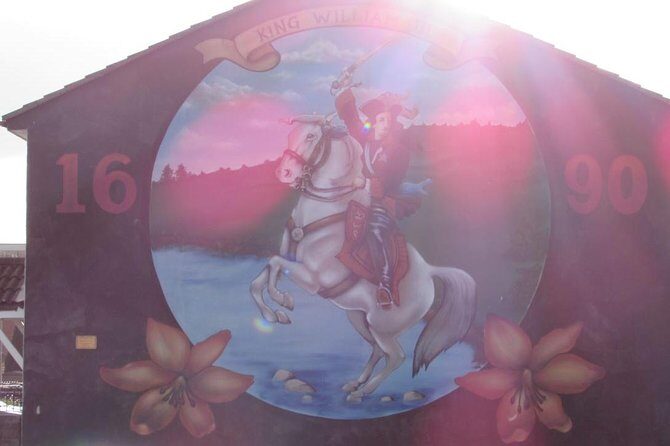
Shankill Graveyard is the final stop on the Shankill side, giving you a chance to take photos of loyalist murals. These murals depict loyalism and British history, and the setting lets you connect artwork to place in a way that feels more grounded than a museum.
This stop is designed as a photography and reflection moment. You’re not standing in front of a random wall—you’re looking at symbols with a specific community context.
One practical tip: be patient with your photo angles. Murals here can fill the scene, but your best shots depend on where the taxi can drop you and where you’re allowed to stand for safety. Keep an eye on space for other visitors too.
If you’ve felt overwhelmed earlier in the day, this can actually help. The graveyard setting encourages quieter attention. It slows your pace without turning the tour into a stop-and-go drag.
Price and Pickup Rules for a Smooth Day
The price is $178.26 per person for a private taxi experience around two hours. At first glance, that’s not a cheap outing. But for Belfast, the value comes from the combination: private transport plus short guided stops plus free-entry sites.
A group walking tour can cost less, but it can’t replace the way a cab connects neighborhoods efficiently. Belfast’s geography is the story. A taxi solves the logistics problem, so your time stays focused on what you came for: murals, memorial walls, and historic sites tied to the Troubles and the peace process.
Pickup is offered from Belfast city center within a 1 km radius from Belfast City Hall, and you can arrange to meet at the front gates. Cruise ships are different: there’s no pickup from cruise ship locations far outside the city center, but you’ll be able to use the cruise shuttle that leaves outside Visit Belfast, which is across the street from City Hall.
You should also plan for the fact that the tour does not include pickup from airports, train stations, or cruise ship ports. A surcharge applies and is paid in cash on the day. If you’re coming from outside Belfast city center, it’s worth factoring this into your budget and timing.
Who This Tour Is Best For
You’ll enjoy this most if you want more than a postcard version of Belfast. This is built for travelers who care about the history and politics behind the murals and memorial walls.
It’s also a good fit if you only have a short window and you don’t want to spend it figuring out routes. The taxi format helps you make sense of the city quickly.
On the other hand, if you prefer light sightseeing, this will feel heavy. The day touches prisons, riots, hunger strike history, and conflict-era violence. It can be educational and respectful, but it’s not neutral entertainment.
This works well for couples and solo travelers who want control over the pace, plus anyone who likes a strong guide narrative instead of independent wandering.
Should You Book This Private Belfast Cab Tour?
I’d book it if your priority is understanding Belfast’s conflict and peace story through the places where people visibly remember it. The private cab format is a real advantage here because the city’s meaningful sites are spread out, and you get timed stops that keep you oriented.
Skip it only if you’re not comfortable with politically sensitive subjects. You’ll be surrounded by symbols that still matter to people today. If that might overwhelm you, consider a shorter, lighter option instead.
If you do book, come with curiosity and a bit of patience. This tour is designed to help you connect murals to meaning, not just collect photos. And if your guide is like Jim, who’s praised for taking the time to explain context with a nuanced view of Northern Ireland’s current situation, you’ll likely leave with a clearer sense of how Belfast’s past still shapes what you see on the street.
FAQ
How long is the Express Terror and Peace private cab tour?
The tour is listed as about 2 hours (approximately), based on the schedule for this private experience.
Is this tour private or shared?
It’s private. Only your group will participate.
What’s included in the tour ticket?
Included pickup is offered from Belfast city center within 1 km of Belfast City Hall, and the tour includes a mobile ticket. Admission at the stops is free as noted for the stops in the route.
Where does the pickup happen?
Pickup is offered within a 1 km radius from Belfast City Hall front gates. The start meeting point is Belfast, UK, and the tour ends back at the meeting point.
Do you pick up from airports or train stations?
Pickup from airports, train stations, and cruise ship ports is not included. A surcharge is payable on the day in cash only.
Do you pick up cruise ship passengers?
No. There’s no pickup from cruise ship locations because they are several miles outside Belfast city centre. The cruise ship shuttle leaves outside Visit Belfast across from City Hall.
What language is the tour in?
The tour is offered in English.
Can children join the tour?
Yes, but children must be accompanied by an adult.
What is the cancellation policy?
You can cancel for free up to 24 hours in advance of the experience for a full refund. If you cancel less than 24 hours before, the amount paid will not be refunded.
You Might Also Enjoy

More Private Tours in Belfast

More Tours in Belfast


More Tour Reviews in Belfast
- Titanic Belfast Entrance Ticket: Titanic Visitor Experience Including SS Nomadic
★ 4.5 · 3,698 reviews