REVIEW · BELFAST
Official World Famous Belfast Taxi Tour ™
Book on Viator →Operated by Giants Causeway Tours · Bookable on Viator
Belfast hits different when it comes with a local driver. This private taxi tour is built around the murals, peace lines, and street-history you can’t fully grasp from guidebooks, and your guide talks through what it meant for ordinary people. I especially liked riding in a comfortable car while hearing first-hand context from Belfast locals such as Paula, Barry, Joe, Billy, Neil, and Lorraine.
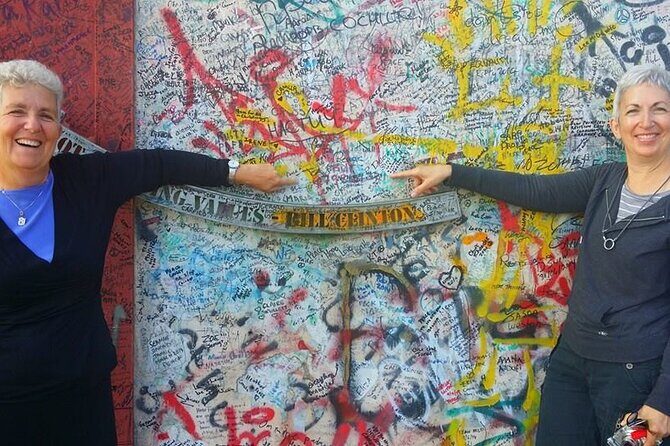
What I like most is the balance of up-close seeing and short, focused stops. I also liked the chance to write your name and a message of hope on the Peace Wall, then move on while everything is still fresh. One possible drawback: the subject matter is heavy and some of the material and imagery can feel graphic, so it’s not a casual outing for kids.
In This Review
- Key things you should know before you go
- Why Belfast taxi touring works for the Troubles murals
- Price and what $90.98 really buys you
- Getting started at Leonardo Hotel Belfast without stress
- Stop 1 at the International Wall: murals, context, and the Peace Wall
- Clonard Monastery and Clonard Gardens: where no-man’s-land feels real
- Shankill Road murals and the Loyalist side of the story
- Back toward the Falls Road area: Bobby Sands, Divis Tower, and St Peter’s
- Peace lines on Cupar Way: what divides neighborhoods today
- Memorial gardens and armed-museum moments: Clonard again, plus what’s handled
- What your local guide does (and why the humor shows up)
- Logistics that actually affect your experience
- Should you book the Official World Famous Belfast Taxi Tour?
- FAQ
- How long is the Belfast Taxi Tour?
- Where does the tour start and end?
- Is pickup included?
- Is the tour private?
- What language is the tour offered in?
- Are there admission tickets included at the stops?
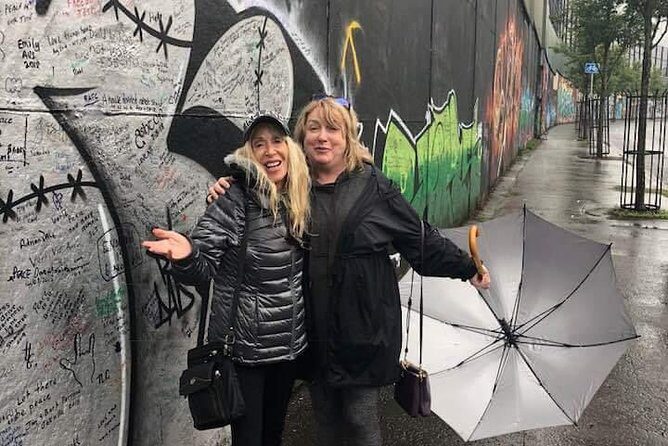
- Can I write my name on the Peace Wall?
- Does the tour include transportation?
- What’s included besides murals and walls?
- Is tipping included in the price?
- What if I need to cancel?
Key things you should know before you go
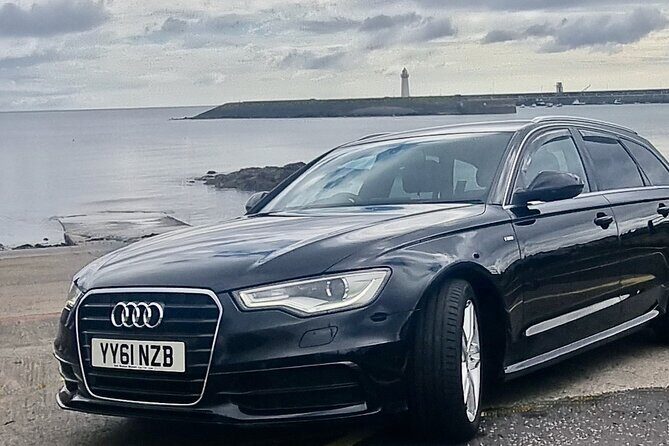
- Private black-taxi style touring: you ride in an air-conditioned vehicle and you’re not mixed into a big bus crowd.
- Peace Walls and gates up close: you’ll see separation barriers that still shape daily life.
- Both sides of the divide: the route is designed to show Loyalist and Republican areas and how street art carries messages.
- Short photo-friendly stop times: many stops are around 5–10 minutes, so you’ll need a camera-ready mindset.
- Hands-on details: the tour includes time to see and handle real plastic and rubber bullets used by British Crown forces.
- Local guide energy: people consistently mention guides with personal stories and humor without dodging hard questions.
Why Belfast taxi touring works for the Troubles murals
Belfast’s murals aren’t just art. They’re a living archive—political messages painted on walls, updated when history shifts, and sometimes left to weather into something even more powerful. Doing this by taxi makes sense because you’re not fighting bus routes or timing. Your driver handles the streets, and you only step out when there’s something worth your attention.
The emotional part is that you’re not learning the conflict as a dusty chapter. You’re seeing how the past still shows up in neighborhoods—through walls, memorial gardens, and the way people talk about identity and safety. I like tours like this because they don’t ask you to connect all the dots yourself. Your guide offers the “why,” so the “what” makes more sense when you’re standing in front of it.
You’ll also get a clear rhythm: drive, stop, look, photos, back in the car, repeat. That matters on a 1.5–2 hour schedule, because you’re not dragging your feet through cold corners with long waits.
You can also read our reviews of more tours and experiences in Belfast.
- Titanic Belfast Entrance Ticket: Titanic Visitor Experience Including SS Nomadic
★ 4.5 · 3,698 reviews


Price and what $90.98 really buys you
At $90.98 per person, this isn’t the cheapest way to tour Belfast. But value here comes from three things you can’t easily buy separately: private transportation, a tightly timed route of politically charged sites, and a local guide who connects street art and landmarks to the Troubles and its lingering legacy.
You’re not just paying for rides between photos. You’re paying for interpretation—especially at places like the Peace Wall, the memorial gardens, and the mural-heavy areas where a casual stroll could leave you with more questions than answers.
Also, if you’re traveling as a group, the tour notes group discounts. That’s one of those small lines that can change the math fast if you’ve got enough people.
Getting started at Leonardo Hotel Belfast without stress
The tour starts and ends at the Leonardo Hotel Belfast, Great Victoria St (BT1 6DY). If you’re staying there, pickup is free, and that’s a real time-saver. If you want pickup from a Belfast hotel/Airbnb, it’s available if requested and is limited to Belfast City Centre only with an extra charge.
This “right where you’re sleeping” setup matters in Belfast because the route is intentionally neighborhood-focused. You’ll want your mental energy for what you’re seeing, not for getting your bearings or figuring out parking.
And the vehicle is described as air-conditioned, which is the kind of unglamorous detail that makes a tour like this easier to stick with, especially when you’re out and about for multiple short stops.
Stop 1 at the International Wall: murals, context, and the Peace Wall
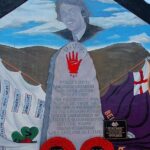
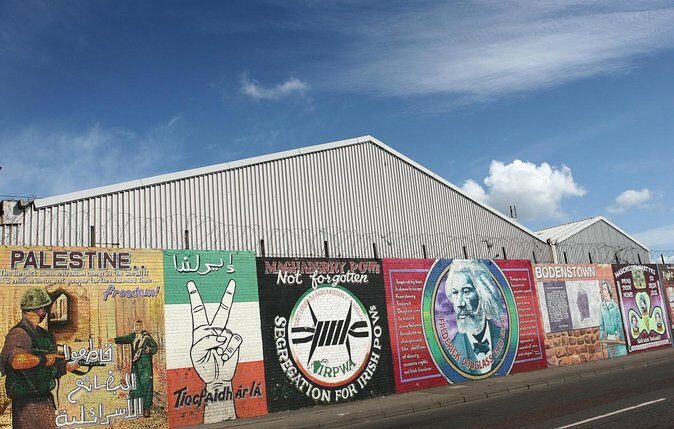
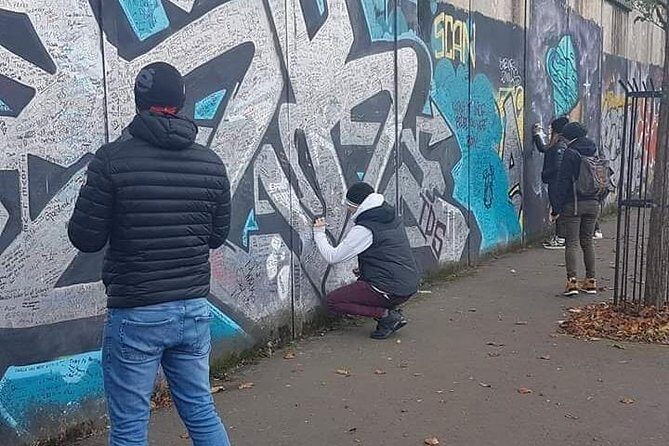
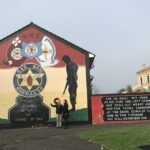
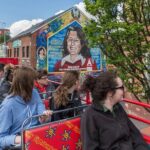
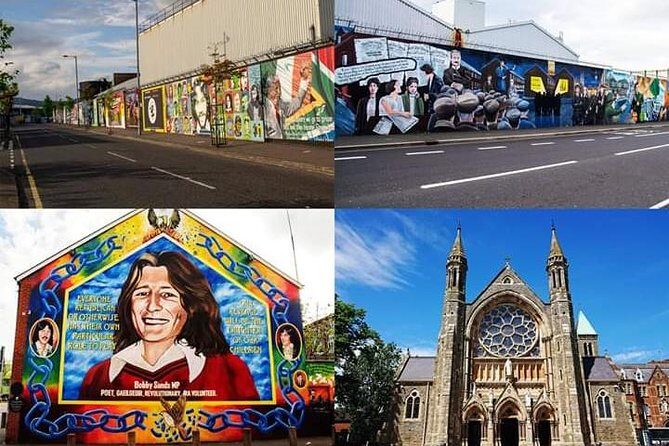
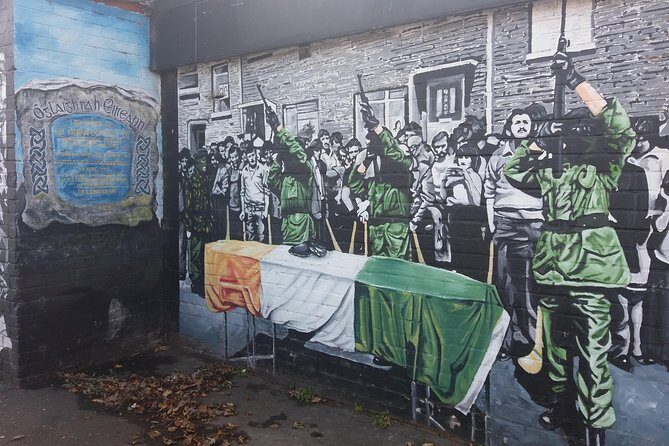
The first big visual hit is the World Famous Murals at the International Wall at Divis Street. This is where the tour leans hardest into street art as a historical record. You’ll see colorful murals created by both Nationalist and Loyalist communities.
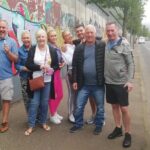
You’ll also get time at the Peace Wall itself. This is the kind of place where the line between “history” and “right now” collapses. The tour includes the chance to write your name and leave a message of hope. The Peace Wall also has notable signatories listed in the tour info, including former U.S. President Bill Clinton and the Dalai Lama.
Photo time here is a big part of the experience. Even with short stop lengths (often about 10 minutes at each major stop), you can make it work if you come prepared:
- Take a minute before you step out to decide your angles.
- Photograph the full wall first, then come closer for faces, paint details, and any messages you want to capture.
Clonard Monastery and Clonard Gardens: where no-man’s-land feels real
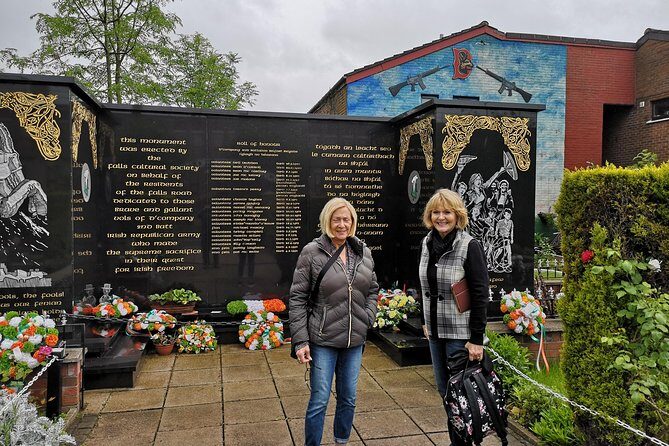
Next comes one of the most sobering stops: Clonard Monastery, described as sitting right in the middle of no-man’s-land. That phrase is doing a lot of work. Standing there with a guide who can explain why it mattered changes the way you interpret the geography.
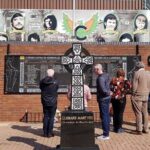
Then you head to Clonard Gardens, focused on the Clonard Martyrs Memorial Garden. The tour’s detail here is specific, naming the IRA C Company context, memorials to fallen volunteers, civilian casualties from the greater Clonard area, and deceased Republican prisoners from 1916–1970. There are also notes about commissioned plaques and an annual commemorative march.
This is one of the stops where the short time limit can feel strict. About 10 minutes is enough to take in plaques and photos, but not enough to absorb everything deeply. My advice: let your guide talk first, then photograph second. If you do it the other way around, you’ll miss context while you’re busy composing shots.
If you’re sensitive to memorial spaces and want a more reflective pace, keep that in mind. This tour is intense and efficient, not slow and ceremonial.


Shankill Road murals and the Loyalist side of the story
Crossing over to Shankill Road is where you’ll see the Loyalist murals clearly. The tour includes time for photos of:
- Loyalist UDA and UVF murals
- The King Billy / King William of Orange mural
Again, the value isn’t just visuals. Street art in unionist communities often commemorates deceased members and communicates group identity through symbols and scenes. Your guide helps explain what you’re looking at, instead of leaving you to guess.
The tour also includes a stop linked to the Bayardo Bar attack (13 August 1975). The tour info explains it as a Provisional IRA bombing/shooting in the loyalist Shankill area, tied to claims about the pub’s UVF connections, and it lists casualties and injuries. That kind of stop can change the feel of the mural area. It makes the walls feel less like “cool street art” and more like messages shaped by fear.
One consideration: if you’re not ready for graphic subject matter, this portion can land hard. The tour reviews also point out that some displays may be too graphic for children, so I’d treat this as adult-focused learning.
Back toward the Falls Road area: Bobby Sands, Divis Tower, and St Peter’s
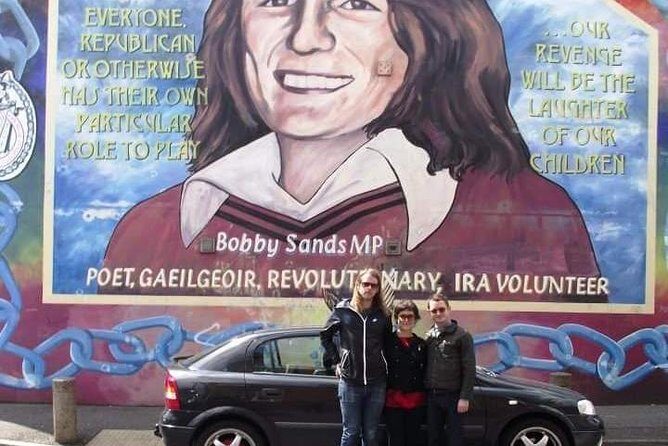
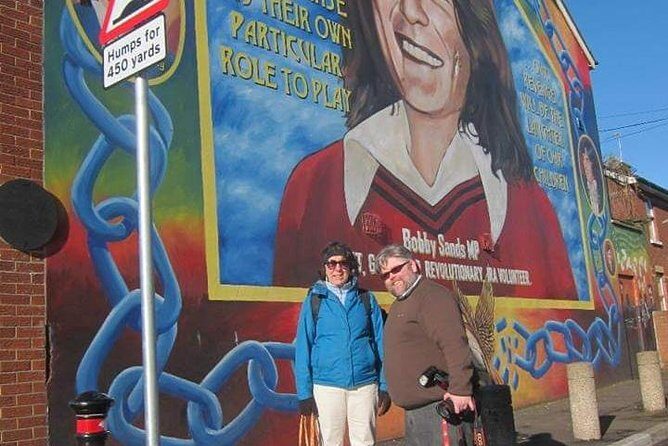
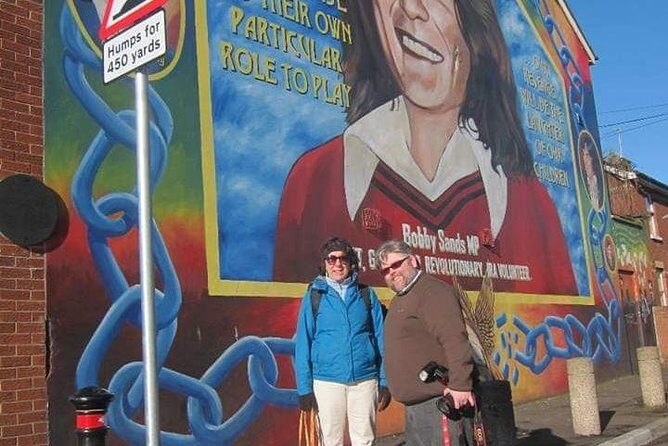
The route brings you back toward the Falls Road / Divis Street area. You’ll see additional attention to the Bobby Sands murals, including what the tour describes as the leader of the 1981 IRA hunger strike. You’ll also encounter references like the Welcome Wall and Divis Tower, described as the heart of IRA territory and connected to a sniper nest used by the British Army.
These stops are short—often around 5–10 minutes—but they’re built around high-impact visuals. When you’re moving quickly, it helps to have your guide’s framing in your head:
- Hunger strike imagery is not just political messaging; it’s memory, identity, and sacrifice.
- Sites tied to military presence still shape neighborhood perception.
You may also visit St Peter’s Cathedral (Ard Eaglais Naomh Peadar), the Roman Catholic cathedral for the Diocese of Down and Connor. The tour info mentions construction began in the 1860s and that it’s home to St Peter’s Schola Cantorum (choir). It’s a useful change of pace: you get a major religious landmark inside the same broader story of community identity.
Peace lines on Cupar Way: what divides neighborhoods today
One of the most distinct parts of this experience is time at peace lines / peace walls, including Cupar Way. The tour describes these as separation barriers in Northern Ireland between predominantly Republican/Nationalist Catholic neighborhoods and Loyalist/Unionist Protestant neighborhoods.
The details matter because you can’t fully understand “peace wall” from the term alone:
- Some are iron/brick/steel
- Some are up to 25 feet (8m) high
- Some have gates that may open in daylight and close at night
- Some stretches run from a few hundred yards to over three miles (5 km)
The tour info also states that these barriers exist in places beyond Belfast, including Derry, Portadown, and elsewhere. Seeing one up close helps you understand how “peace” can come with physical reminders of separation.
This is also where you’ll want to focus your photos. Capture the barrier itself, then capture the street context—what it feels like to walk up to a line you didn’t get to choose.
Memorial gardens and armed-museum moments: Clonard again, plus what’s handled
The tour includes additional time at Clonard Martyrs Memorial Garden again, alongside a Garden of Remembrance linked to the IRA Belfast Brigade D Company. On the Loyalist side, there’s mention of a Shankill Road Memorial Garden and a Bayardo Memorial Garden.
There’s also a hands-on inclusion: the tour offers time to see and handle real plastic and rubber bullets used by British Crown forces. I appreciate that this isn’t just a lecture. It’s a reminder that the conflict involved everyday objects and close-range danger. Just know that this part can feel intense if you’re squeamish about weapon replicas or anything related to violence.
What your local guide does (and why the humor shows up)
The tour info says all guides are Belfast locals who lived through the Troubles. That lines up with what I’d call a hallmark of this experience: your guide brings personal context, and they don’t treat the subject like a museum display.
In the reviews you’ll see guides like Paula and Barry praised for being passionate, with Joe and Neil highlighted for answering lots of questions and tailoring the pace to interests. Billy and Lorraine also come up with stories that mix a serious core with some light humor.
That combination matters. If a guide is only grim, you’ll feel crushed. If they’re only upbeat, you won’t trust them. Here, the best guides seem to do both: they respect the weight of the past, but they keep the ride lively enough for you to stay engaged.
So, if you’re going into this expecting a neutral “history facts” script, adjust your expectations. This is a human story told through street art and neighborhoods.
Logistics that actually affect your experience
This tour runs about 1 hour 30 minutes to 2 hours and uses private transportation. It’s offered in English, and the tour is described as private, meaning only your group participates.
Stop times are short—often 5 or 10 minutes at each location—so you’ll get less time at one single spot than you might want. The tradeoff is that you see more of Belfast’s political geography than you’d manage on your own in a day.
Wear what you’d wear for walking and standing around outside, because even short stops mean you’ll be in the street air for a bit. And bring an extra-charged phone or camera battery. You’ll be photographing murals, walls, plaques, and memorial gardens.
If you’re traveling as a family, treat it as an adult learning experience first. The tour info and reviews suggest some displays and imagery may be too graphic for children.
Should you book the Official World Famous Belfast Taxi Tour?
Book it if you want the fastest way to understand Belfast’s “still-splitting” story—through murals, Peace Walls, and memorial sites—with a local guide who can explain what you’re seeing as you see it. At $90.98, the price makes sense because you’re buying private transport plus guided interpretation, not just a ride.
Skip it or consider a different approach if:
- You want something light and scenery-first rather than conflict-focused
- You’re bringing kids and aren’t comfortable with difficult, possibly graphic material
- You’d prefer a slower, more reflective pace at memorial spaces
If you do book, go in with one mindset: these walls and murals are part of how people live, not just what you see. If you’re ready for that reality, this tour can give you a clear, memorable understanding of Belfast that photos alone won’t deliver.
FAQ
How long is the Belfast Taxi Tour?
The tour lasts about 1 hour 30 minutes to 2 hours (approx.).
Where does the tour start and end?
It starts at the Leonardo Hotel Belfast, Great Victoria St, Belfast BT1 6DY, UK, and ends back at the meeting point.
Is pickup included?
Free pickup and drop-off are offered from the Leonardo Hotel Belfast City Centre. Pickup/drop-off from other Belfast hotels or Airbnbs may be available if requested for Belfast City Centre only, and it carries an extra charge.
Is the tour private?
Yes. It is a private tour/activity, and only your group will participate.
What language is the tour offered in?
The tour is offered in English.
Are there admission tickets included at the stops?
Some stops list admission as free, while others list admission as included in the tour. The tour descriptions include both types for different mural and memorial stops.
Can I write my name on the Peace Wall?
Yes. The tour includes the chance to write your name and leave a message of hope on the Peace Wall.
Does the tour include transportation?
Yes. The tour includes private transportation in an air-conditioned vehicle, and your driver handles navigation.
What’s included besides murals and walls?
The included features mention time to see and handle real plastic and rubber bullets used by British Crown forces, plus visiting both sides of the divide and learning from local guides.
Is tipping included in the price?
No. Tips for your guide are not included.
What if I need to cancel?
Free cancellation is available up to 24 hours in advance for a full refund.
You Might Also Enjoy

More Tours in Belfast

More Tour Reviews in Belfast
- Titanic Belfast Entrance Ticket: Titanic Visitor Experience Including SS Nomadic
★ 4.5 · 3,698 reviews