REVIEW · BELFAST
1 Hour Express Belfast Taxi/Cab Tour History, Murals, Troubles
Book on Viator →Operated by Belfast famous black taxi tours · Bookable on Viator
Belfast gets personal fast on this taxi ride. I really like that this private tour is run by local taxi drivers who talk through daily life during the Troubles, not just dates and headlines, with Falls Road murals right on the route. It’s a tight, focused way to understand how the city’s neighborhoods tell political stories in plain sight.
I also love the convenience: pickup from most centrally located Belfast hotels and a clear plan that fits a short day. One thing to consider is that you’ll see very direct reminders of violence, including bullet holes and memorial-style mural quotes, so it helps to be mentally ready for heavy themes.
In This Review
- Key points to know before you go
- Why this 1-hour black taxi tour feels like the fastest route to meaning
- Pickup at the Leonardo Hotel and how the logistics actually help
- Stop 0: Falls Road Library bullet holes and the Bobby Sands mural
- Stop 1: Divis, PIRA’s role, and why neighborhoods matter
- Stop 2: The Peace Wall and the meaning of a barrier that never really left
- Stop 3: Shankill Road, loyalist murals, and paramilitary history in view
- What I love most: the local driver perspective, including Brendan’s style of storytelling
- Price and value: $89.45 for a short, private, historically focused route
- Timing tips: how to fit it into a day without feeling rushed
- Who should book this tour (and who might want a different option)
- Should you book the Belfast Falls Road, Peace Wall, and Shankill Road taxi tour?
- FAQ
- How long is the taxi tour?
- What does the tour cost?
- Is the tour private?
- Where does the tour start and end?
- Is pickup from hotels included?
- What’s included in the price?
- Is the tour suitable for children?
- What if I need to cancel?
Key points to know before you go
- Private taxi for your party means your driver can adjust the pacing to your questions
- Local taxi drivers share first-hand style context about the Troubles
- Falls Road Library and murals mix physical evidence (bullet holes) with landmark political art
- Peace Walls stop lets you sign the barrier and see how it shaped daily life
- Shankill Road murals bring the loyalist side into the same one-hour overview
- Air-conditioned car keeps the ride comfortable even when Belfast weather turns
Why this 1-hour black taxi tour feels like the fastest route to meaning
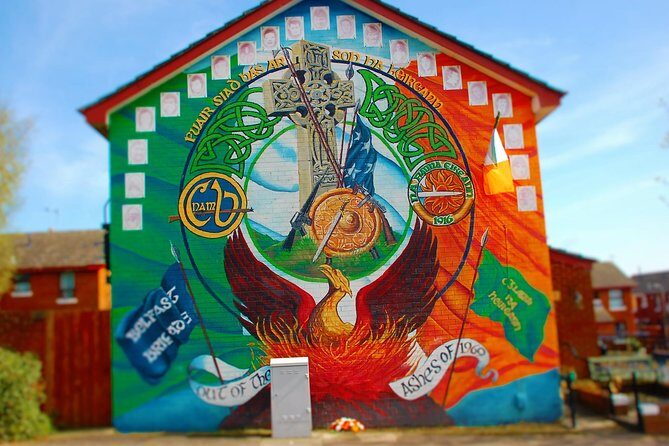
Belfast can be overwhelming at first. You might walk past murals and barriers and wonder what you’re looking at, exactly, and why it’s still there. This tour is built for that moment. In about an hour, you get a guided thread that connects neighborhoods, artwork, and the conflict period known as the Troubles (late 1960s to 1998).
The format helps. Instead of wandering on your own, you get a taxi driver who can point out what locals notice. And because it’s private for your group, your questions don’t have to wait for a larger bus schedule.
You can also read our reviews of more historical tours in Belfast
Pickup at the Leonardo Hotel and how the logistics actually help
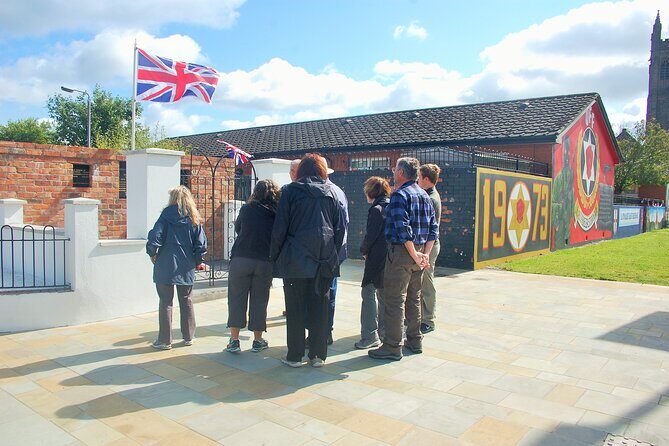
The tour starts back at the central Leonardo Hotel Belfast on Great Victoria St. That’s an easy anchor point if you’re staying anywhere in the city center. You also get pickup from most centrally located Belfast hotels included, which means you’re less likely to waste time figuring out taxis or where to meet.
Duration matters here. At about 1 hour, you’re not committing to a half-day plan. It’s the kind of tour you can pair with lunch, a museum visit, or just a slow evening walk afterward. If your schedule is tight, this one checks the key boxes without dragging on.
The vehicle is air-conditioned, which you’ll appreciate more than you’d think in the shoulder seasons when Belfast can feel damp and chilly on foot. And it’s offered in English, with a mobile ticket for the booking.
Stop 0: Falls Road Library bullet holes and the Bobby Sands mural
This is the stop that sets the tone. On Falls Road, you’ll see the Falls Road Library with bullet holes left from gun battles involving British Army forces during the conflict era. It’s not a pretend exhibit. It’s a real building scar. For me, that’s what makes the tour different from just reading about the Troubles afterward.
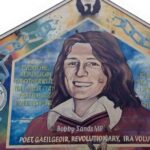
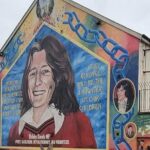
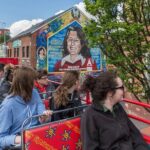
Right across from that reminder is one of the most recognizable political murals in Belfast: the Bobby Sands mural on Falls Road. The mural focuses on Bobby Sands, an IRA member who died on hunger strike in 1981 while imprisoned in the H block Prison. You’ll also see the quote: Our revenge will be the laughter of our children.
Even if you’re new to the topic, the mural does something smart. It links sacrifice with a message about the future, rather than only staring at the past. Your driver can help you read it as a piece of community identity, not just a photo-op wall.
Stop 1: Divis, PIRA’s role, and why neighborhoods matter
From the Falls Road core, the route moves through West Belfast into the Divis area. This stretch is closely tied to Irish republicanism and the Provisional Irish Republican Army (PIRA), especially during the Troubles. Your driver frames Divis as part of a wider geography where communities, tensions, and group activity were shaped by more than just politics.
You’ll likely hear how the Falls Road became a stronghold of Catholic and nationalist sentiment, while nearby areas like the Shankill Road were associated with Protestant and loyalist communities. That division wasn’t abstract. It showed up in everyday life, including how people experienced socioeconomic deprivation and sectarian division.
PIRA specifically comes up in the tour context as well. You’ll get the basic storyline: the Provisional IRA formed in 1969 following a split in the IRA. In a one-hour tour, you don’t get a textbook. Instead, you get the kind of context that makes later headlines make more sense when you’ve got the map in your head.
One small drawback: because the whole tour is compact, Divis and its story may feel like a snapshot. If you love deep academic history, you’ll want to pair this with independent reading or a longer targeted tour the next day. But if you want your bearings fast, it works.
Stop 2: The Peace Wall and the meaning of a barrier that never really left
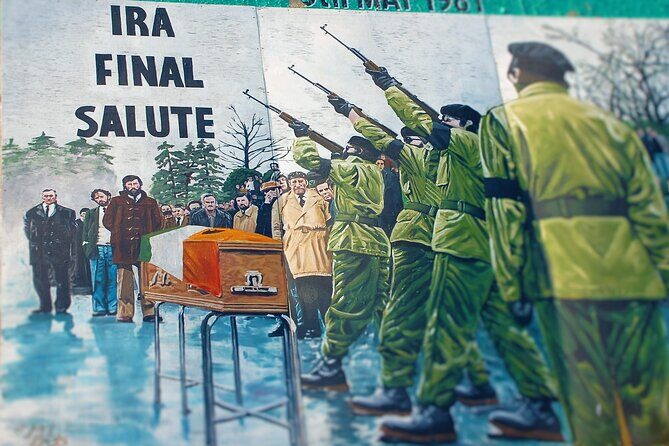
At the Peace Wall stop, you’ll get the tour’s most physical visual metaphor. Belfast’s Peace Walls are barriers built primarily in Belfast to separate predominantly Catholic and nationalist communities from predominantly Protestant and unionist communities. The walls began in 1969, in the early Troubles period, as temporary structures meant to reduce violence. They didn’t stay temporary.
On this stop, you’ll see how the barriers can range from shorter fences to larger concrete walls, often topped with steel, barbed wire, or gates. And here’s a hands-on detail that makes it feel real: you can sign your name on the world famous Peace Walls.
Signing a wall like this sounds almost symbolic in a lighthearted way, but it also forces you to think about who leaves marks in public space and why. It’s the kind of moment where your taxi driver’s explanation adds value, because they can connect the wall to daily movement and community boundaries—things that go beyond what any single photo captures.
A few more Belfast tours and experiences worth a look
Stop 3: Shankill Road, loyalist murals, and paramilitary history in view
The final neighborhood stop lands you on Shankill Road. This is the complementary side of the story. Shankill Road is predominantly working-class, unionist, and loyalist, and it’s strongly associated with loyalist paramilitary organizations during the Troubles.
In your taxi, you’ll connect what you learned on the Falls Road side to what appears here. Your driver can point out the political murals and explain the historic associations tied to groups active during the conflict period, including the Ulster Volunteer Force (UVF) and the Ulster Freedom Fighters (UFF).
As you stand on Shankill Road, it helps to remember the basic map of identity the tour gives you: Falls Road has long been framed as Catholic and nationalist, with republican political and cultural activity, while Shankill Road is linked to Protestant and loyalist community identity. The tour doesn’t ask you to agree with any side. It’s more about helping you understand why the streets themselves became messages—and why those messages stayed visible for decades.
This stop is also useful if you’ve already seen political murals in other places and want a Belfast-specific read. Here, the art is not decoration. It’s a local language—part memory, part warning, part pride, part grief.
What I love most: the local driver perspective, including Brendan’s style of storytelling
The highest praise for this kind of tour is consistent: it’s all about the driver. In one standout experience, the group rode with Brendan, and the key detail wasn’t just that he had information—it was that he grew up through the Troubles period. That matters, because his explanations have the shape of lived routine: what people feared, what people watched for, and how neighborhoods felt different depending on where you stood.
Even when you don’t get Brendan, you can still expect the same idea: local taxi drivers guide the story. Their advantage is speed and specificity. They can answer your question right away, whether you’re curious about how murals fit into community identity or what barriers changed over time.
That hands-on guidance is why a short 1-hour format can still feel meaningful. You’re not receiving a lecture. You’re getting a route plus explanations timed to the scenes you’re actually seeing.
Price and value: $89.45 for a short, private, historically focused route
At about $89.45 per person for roughly one hour, this tour is not the cheapest thing in Belfast. But for what you’re getting, it’s easier to justify.
Here’s the value logic I’d use:
- Private vehicle: you’re not sharing a cramped ride with strangers.
- Pickup included from most centrally located hotels: less hassle, less time wasted.
- Local driver-led context: you pay for an experienced storyteller who can connect the dots between murals and the Troubles period.
- Several major sights in one loop: bullet-hole library, Bobby Sands mural, Falls Road/Divis context, Peace Wall, and Shankill Road.
It also helps that a lot of the stops don’t require paid admission. Free time on the sights is built into the schedule. So your money is mostly going to the guided ride and interpretation, not entrance fees.
If you’re a solo traveler, the price can feel sharp—but the private setup still makes it worth it because you’re not waiting for others to keep up. If you’re a small group, it tends to feel more reasonable because the same taxi supports more people across one hour.
Timing tips: how to fit it into a day without feeling rushed
Because this is an approximately 1-hour experience, plan it early enough that you can use what you learned while you still have energy to look closely at the city afterward. After the tour, you’ll likely notice more in the murals and streets—especially if you keep thinking about the Troubles as something that shaped geography, not just events.
Also, don’t stack it with another long walking tour right before it. Your brain needs time to process what you see. The Peace Wall signing and the visible remnants from violence can land emotionally, even if you came expecting history.
If you prefer a lighter day, pair this with a calmer activity afterward, like a café stop or a museum visit that focuses on culture rather than conflict.
Who should book this tour (and who might want a different option)
I think this tour is a strong match if you:
- Want a short, focused introduction to Belfast politics and murals
- Like learning from locals, especially taxi drivers with personal context
- Are staying centrally and want an easy pickup option
- Have limited time but still want to see both sides of the city’s conflict geography
You might choose something else if you:
- Want a long, detailed academic history lesson with lots of time in one area
- Have limited tolerance for heavy subject matter and visible reminders of violence
- Expect a purely scenic tour (this is streets-and-stories, not just views)
Should you book the Belfast Falls Road, Peace Wall, and Shankill Road taxi tour?
Yes, if you want the best use of a short window in Belfast. This is one of those experiences where the time compression actually helps. A private taxi ride means you can ask questions and adjust on the spot, and the route hits the most important visual anchors: Falls Road’s murals and bullet-holed library, the Peace Walls, and Shankill Road with its loyalist mural context.
Book it if you’re ready to think about the Troubles as something that lives in buildings, street art, and borders. Don’t book it if you want a casual, light, scenery-only tour.
If you do go, go with a practical mindset: bring your curiosity, keep your questions short, and let the driver connect the mural text, the barriers, and the neighborhoods into one coherent story. That’s where the value really shows.
FAQ
How long is the taxi tour?
It runs for about 1 hour.
What does the tour cost?
The price is listed as $89.45 per person.
Is the tour private?
Yes. It’s a private tour/activity, and only your group will participate.
Where does the tour start and end?
It starts at the Leonardo Hotel Belfast on Great Victoria St, Belfast BT1 6DY, and it ends back at the meeting point.
Is pickup from hotels included?
Yes. Pickup from most centrally located Belfast hotels is included.
What’s included in the price?
The tour includes a guide, an air-conditioned vehicle, and a free pic. Drinks and food are not included.
Is the tour suitable for children?
Children must be accompanied by an adult, and most travelers can participate.
What if I need to cancel?
This experience is non-refundable and cannot be changed for any reason. If it’s canceled because the minimum number of travelers isn’t met, you’ll be offered a different date/experience or a full refund.
You Might Also Enjoy
More Historical Tours in Belfast

More Tours in Belfast



More Tour Reviews in Belfast
- Titanic Belfast Entrance Ticket: Titanic Visitor Experience Including SS Nomadic
★ 4.5 · 3,698 reviews