REVIEW · BELFAST
Belfast Troubles Murals Street Art and Peace Wall Walking Tour
Book on Viator →Operated by belfastology walking tours · Bookable on Viator
Murals tell Belfast’s hardest truths. This Belfastology walk links the Troubles to street art you can see today, then ends at the Peace Wall so you understand how Belfast is trying to heal. It’s a small-group, roughly 3-hour stroll led by local guide Marti, with plenty of time to stop, look, and process. I especially love the range of murals—from international artists to community-made projects—and how the walk keeps moving at a human pace. The one possible drawback: there’s no microphone, the guide keeps a brisk rhythm, and the subject matter is adult and intense (so plan your brain for it).
You’ll also get practical extras that make the day easier, like provided shopping and restaurant discounts, plus a mobile ticket so you’re not hunting for paper. Bring good shoes, expect weather swings, and come prepared for a walk that’s more “guided storytelling on foot” than “quick photo tour.”
In This Review
- Key Things You Should Know Before You Go
- Belfast Murals, Troubles, and Peace Wall on Foot
- Stop 1: Cathedral Quarter to West Belfast Street Art and the Re-Imaging Project
- Stop 2: Shankill Road Loyalist Murals and Local Street Art
- Stop 3: International Mural Wall on Divis Street With Causes From Around the World
- Stop 4: Peace Wall Separation Stop and the Admission-Not-Included Detail
- Stop 5: The Bobby Sands Mural Photo Moment in Republican West Belfast
- Finishing in the City Centre: Where Your Walk Ends
- How the Tour Connects Troubles to Peace Work (Without Pretending It’s Simple)
- Pace, Shoes, Weather, and the No-Microphone Reality
- Price and Value: What $36.11 Buys in Belfast
- Who Should Book This Tour—and Who Should Skip It
- Should You Book This Belfast Troubles Murals and Peace Wall Tour?
- FAQ
- How long is the Belfast Troubles Murals Street Art and Peace Wall walking tour?
- Where does the tour start and end?
- How much does it cost?
- Is the tour offered in English?
- Is the Peace Wall admission included?
- What kind of walking level is expected?
- Is it suitable for children or teens?
- What’s the cancellation policy?
Key Things You Should Know Before You Go
- Small group, maximum 8: fewer people means more time at each mural and more respect for the neighborhoods you pass through.
- No microphone: you’ll need to stay close and keep pace to catch everything.
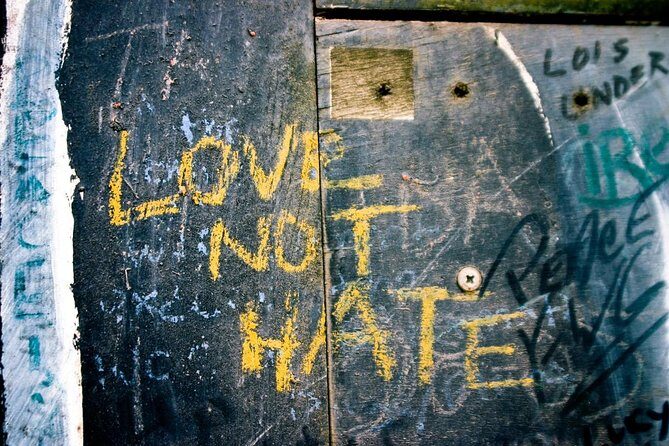
- More street art than politics: you’ll see loyalist and republican murals, plus international and community street art.
- Peace Wall stop has a catch: viewing the wall involves admission not included, so budget for that if required.
- Good for understanding Belfast today: the murals are used as a way to explain the past and how peace work continues now.
- Adults only: not suitable for under 18s.
Belfast Murals, Troubles, and Peace Wall on Foot
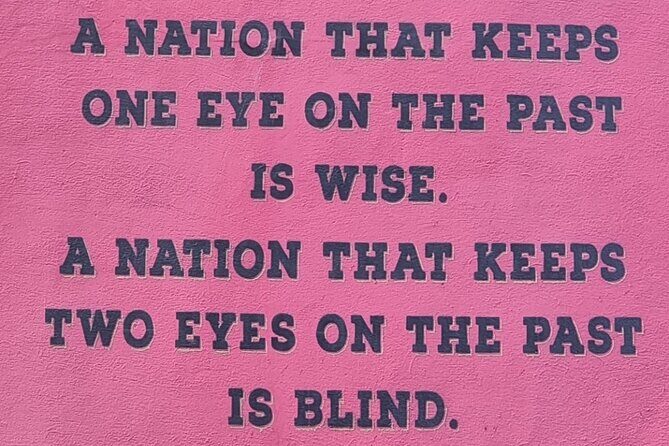
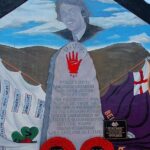
This tour is built around one idea: if you want to understand Belfast, look at what people paint. Murals here don’t just decorate walls. They mark identity, memory, loss, pride, fear, and hope—often all in the same block.
You’ll cover about 2.5 to 3 hours of walking with a local guide (Marti) and a small group of up to 8 people. The route focuses on West Belfast, where political murals and peace efforts are most visible, but you’ll start nearer the city center and fan outward.
The price is $36.11 per person, which is pretty fair for a specialist walking tour that blends street art, neighborhood context, and a highly local perspective. You’re paying for time with a guide who knows what you’re looking at and why it matters.
One more reality check: this isn’t a casual “culture walk.” It’s an adult conversation about the Troubles and the road to peace. So if you’re expecting fluffy content, this will feel heavy. If you want clarity—about what happened and what’s still being repaired—you’ll likely find it rewarding.
You can also read our reviews of more walking tours in Belfast
Stop 1: Cathedral Quarter to West Belfast Street Art and the Re-Imaging Project
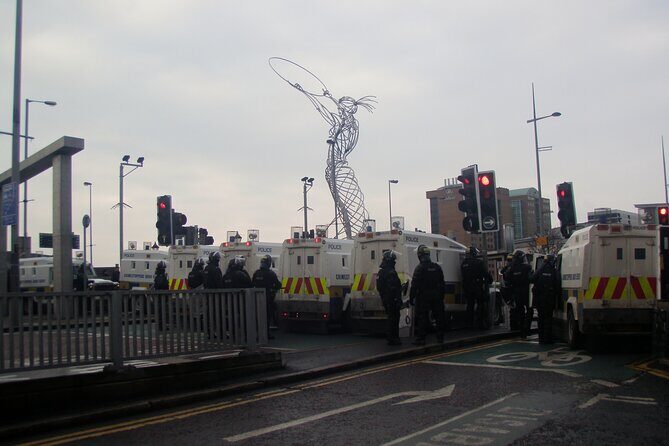
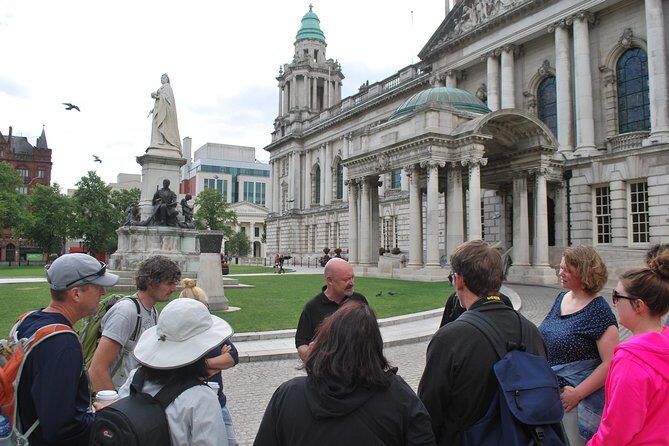
You begin at Exchange Street West (Exchange St W, Belfast). From there, the walk works its way into the Cathedral Quarter area and then toward the west side of the city—where murals get more controversial and more personal.
This first leg is around 30 minutes, and it’s designed to set your baseline. You’ll see modern street art by international street artists, plus murals that Belfast is known for now—then you’ll start shifting into political work and the story behind it.
Two things make Stop 1 especially useful for your understanding:
- You get both international street art and Northern Ireland–specific messaging, so you see Belfast isn’t “stuck in the past.”
- The guide points out projects that show how local communities want to shape what goes on their walls.
A highlight here is a project called re-imaging, described as putting street art or murals up that local communities choose—so the work reflects what residents want passersby to notice. That matters because you’re not just seeing old propaganda. You’re seeing how people try to reclaim public space.
What to watch for: in this area, some murals may feel blunt or emotionally charged. Don’t rush past them. The tour gives you time to stand still and look, which is the whole point. If you take photos, do it slowly—these murals reward attention.
A practical note: this is also where you’ll start to notice the tour style. The guide doesn’t use a microphone, so if you drift away, you’ll lose parts of the story.
Stop 2: Shankill Road Loyalist Murals and Local Street Art
From the Cathedral Quarter area, the tour moves to Shankill Road. This is a shorter stop—about 15 minutes—but it’s meaningful because it takes you into a neighborhood strongly associated with loyalist mural traditions.
At Shankill Road, you’ll view loyalist murals alongside local street art. The contrast is the lesson: the murals aren’t only political. They often sit next to everyday community imagery, slogans, and art that changes over time.
Why this stop matters: if you only look at murals as “messages,” you miss how they function as part of daily neighborhood identity. On Shankill Road, you’re seeing how communities use art to communicate belonging and perspective, not just to comment on national events.
Possible drawback: because this is an area with deep history and strong feelings, the tour’s framing can be intense. You’ll want to keep an open mind and be ready for a direct, pointed style of explanation.
Stop 3: International Mural Wall on Divis Street With Causes From Around the World
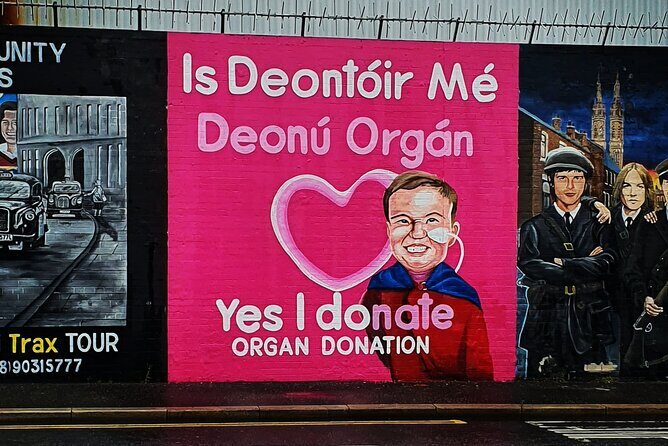
Next comes the International Mural Wall on Divis Street. Another 15 minutes, and this is where the tour widens its lens.
Here, you’ll see murals connected to causes around the world—so you’re not only stuck in local political imagery. It becomes a reminder that Belfast’s street art language is shared internationally: communities elsewhere use walls to argue for justice, memory, solidarity, and change.
This stop is short, but it helps you avoid a common mistake. It’s easy to leave Belfast only thinking of murals as “one thing,” like conflict messaging. The Divis Street wall helps you see how the mural format can carry many types of meaning, including activism and global empathy.
Tip: stand back for a second and scan the wall as a whole before you zoom in. Even in a brief stop, that gives you context for individual pieces.
Stop 4: Peace Wall Separation Stop and the Admission-Not-Included Detail
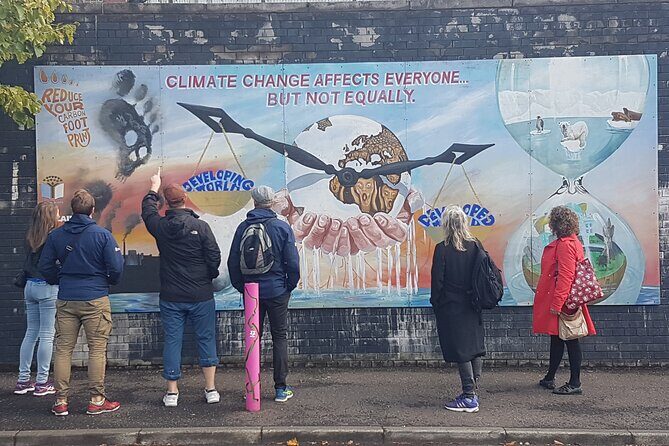
Then you reach the Peace Wall, described as separating communities. Expect about 10 minutes for this viewpoint.
This is the emotional center of the route. You’ll be standing in front of a physical boundary that tells you Belfast isn’t “all healed” in one tidy step. Instead, you see how peace work looks on the ground: not only speeches and signs, but also fences, walls, and the need for ongoing change.
One detail you need to plan for: admission to the Peace Wall is not included. That means if there’s a ticketed viewing area or related entry requirement, you’ll need to pay separately.
From a value standpoint, don’t think of the wall as the “pay extra for photos” portion. It’s the stop that turns the earlier murals into context. When you’ve seen political and community art up close, the wall stops being a random tourist sight—it becomes part of the story.
A few more Belfast tours and experiences worth a look
Stop 5: The Bobby Sands Mural Photo Moment in Republican West Belfast
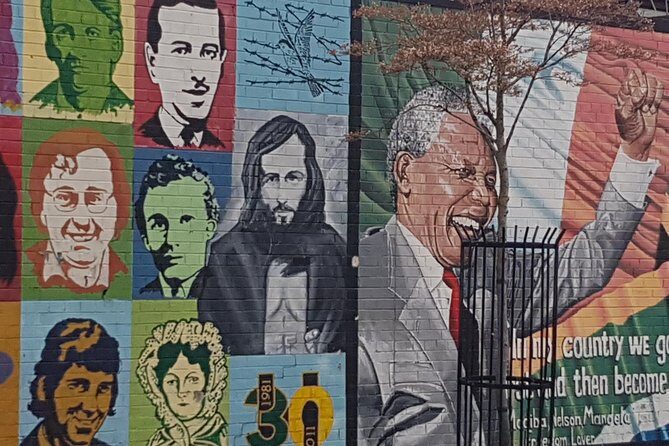
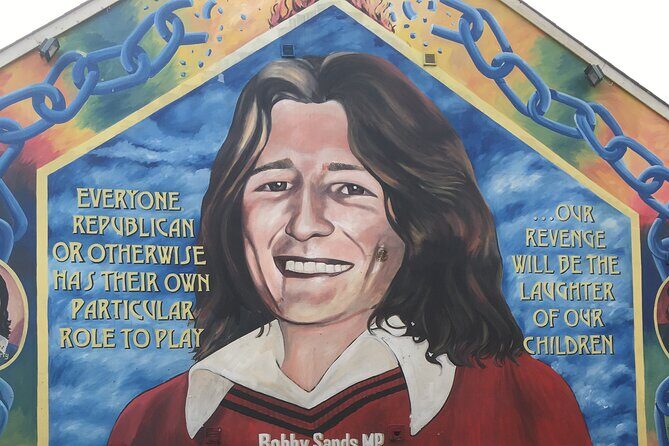
The final major mural stop is the Bobby Sands Mural. It’s only about 5 minutes, but it’s one of the most photographed images in republican West Belfast.
The tour gives you a quick moment to see it in person and absorb why it’s so widely captured. Bobby Sands is a symbol that carries heavy meaning, and murals like this serve as public memory.
The best way to handle a short stop like this: don’t only take the photo. Look at how the mural sits in its streetscape. Notice whether the surrounding street art supports the same themes—or shifts to different community messaging. That contrast is often where the tour’s “past to present” story clicks.
After the Bobby Sands stop, your walk continues back toward the city centre, with more street art and political murals along the way.
Finishing in the City Centre: Where Your Walk Ends
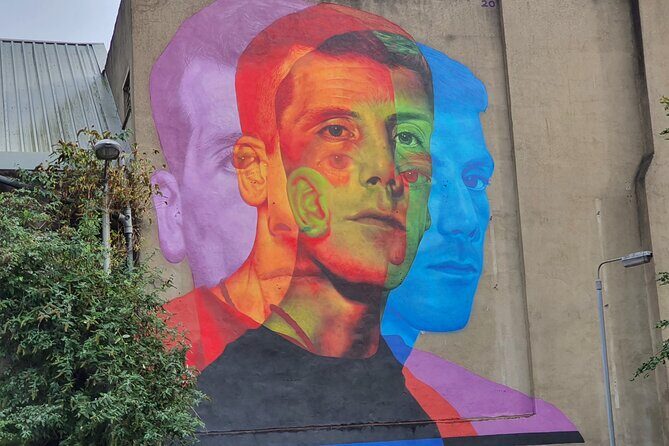
The tour finishes back in the city centre at 32 Bank St, Belfast BT1 1DA. You’ll also be routed to finish near Kellys Cellers.
There’s an option to continue with a short walk toward City Hall at 2 Royal Avenue in a local community center. Either way, you end close enough to keep exploring on your own, grab food, and use the provided local discounts if you want.
If you like to plan your day, this timing works well. Around the time you finish, many visitors are ready for a meal and a slower pace.
How the Tour Connects Troubles to Peace Work (Without Pretending It’s Simple)
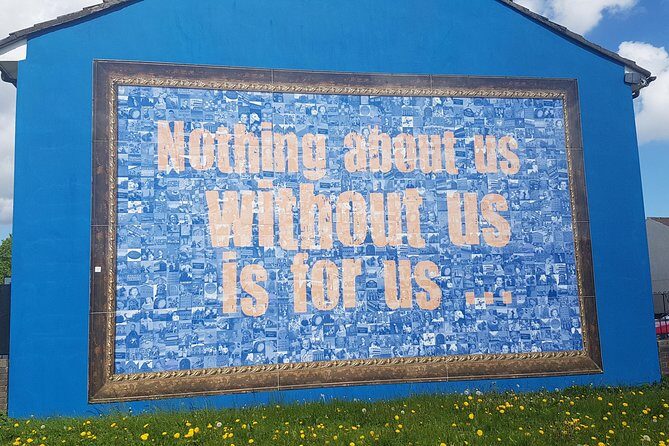
What makes this tour more than a mural checklist is the way it connects three things:
1) the Troubles period and political context,
2) what murals say about everyday communities, and
3) how peace efforts keep going through art and shared public space.
The guide uses murals as touchpoints. You’re not learning the entire conflict in three hours. You’re getting a way to interpret what you’re seeing and why people still care. The tour also highlights modern changes, including projects driven by locals.
That’s why it’s so valuable for first-timers: you leave with a lens. Instead of seeing Belfast as only headlines and stereotypes, you start noticing details—who is being remembered, who is being represented, and how the city is trying to rewrite the future.
One more note on balance: multiple guests describe the guide as aiming for a balanced view. That doesn’t mean everything feels neutral. It means the explanation tries to include multiple perspectives and emphasize that peace is a shared effort, not a one-sided “win.”
Pace, Shoes, Weather, and the No-Microphone Reality
Here’s the practical stuff that can make or break your experience.
- Walking pace: you should be ready for a brisk walk. One review mentioned about 6 km covered in 3 hours, and the guide doesn’t slow down for stragglers.
- No microphone: the guide speaks clearly, but you’ll need to stay close to hear everything.
- Moderate physical fitness: the tour asks for moderate fitness level, and you should expect time on your feet.
- Weather: Belfast can rain and feel colder than you expect. Dress for it. Sunglasses are optional, and strong sun can happen, so sunscreen in summer is sensible.
My advice: wear shoes you trust for long sidewalks and wet pavement. Bring a lightweight rain layer. If you’re the kind of person who likes to stop and read tiny text, you might find the pace pushes you—so pick one or two favorites to study deeply.
Also, the tour is adults only (not suitable for under 18s). If you’re traveling with teenagers, this might not be the right fit.
Price and Value: What $36.11 Buys in Belfast
At $36.11, you’re not just buying entry to a few sights. You’re buying:
- a local guide who explains what you’re looking at,
- a route that covers multiple mural zones (including both sides of the political divide in West Belfast),
- and a street-art focus that gives you time to absorb, not just snap and run.
This is the kind of tour where the guide makes the difference. If you show up with no context, murals can look like symbols without meaning. With context, they become readable.
The small-group cap (up to 8) also adds value. Fewer people means you’re more likely to hear the guide well and spend real time at each stop. And because the tour includes shopping and restaurant discounts, there’s a small chance you’ll stretch your day’s budget further—depending on where you eat and shop afterward.
The main “cost” you should factor in isn’t money—it’s mental energy. The subject matter is intense. If you’re ready for that, you’ll likely feel like the price is fair for what you get.
Who Should Book This Tour—and Who Should Skip It
Book it if you want:
- a guided walk that focuses on Belfast political murals and community street art,
- a route that includes the Peace Wall and the Bobby Sands Mural,
- a local storyteller style (with lots of detail and strong direction),
- and an experience that helps you understand Belfast today, not just the headlines.
Skip it if:
- you need a very easy, slow, low-content walk,
- you’re not comfortable with the Troubles being explained directly,
- or you prefer a guide who uses a microphone and invites lots of group back-and-forth.
And if you’re someone who likes to ask questions: you might have to be patient. The tour is structured and timed, and it sounds like the guide runs it as a taught walking experience rather than a casual Q&A circle.
Should You Book This Belfast Troubles Murals and Peace Wall Tour?
Yes, I think you should book it if you’re visiting Belfast for the first time and want a clearer read on the city. This tour gives you exactly what many people miss when they rely only on photos and headlines: the neighborhood context and the meaning behind the walls.
Pick it over a generic photo tour if you value interpretation. Bring sturdy shoes, show up ready to walk briskly, and plan to take the emotional weight seriously. If you want a thoughtful, street-level way to connect Belfast’s past with its peace efforts, this one is a strong match.
FAQ
How long is the Belfast Troubles Murals Street Art and Peace Wall walking tour?
It runs about 3 hours (listed as approximately 2.5 to 3 hours).
Where does the tour start and end?
It starts at Exchange Street West (Exchange St W, Belfast BT1, UK) and ends at 32 Bank St, Belfast BT1 1DA, finishing near Kellys Cellers.
How much does it cost?
The price is $36.11 per person.
Is the tour offered in English?
Yes, it’s offered in English.
Is the Peace Wall admission included?
No. Peace Wall admission is noted as not included.
What kind of walking level is expected?
You should have a moderate physical fitness level, and the tour involves walking through multiple areas.
Is it suitable for children or teens?
No. It is listed as adults only, with no suitable for under 18s.
What’s the cancellation policy?
You can cancel for a full refund up to 24 hours in advance. If you cancel less than 24 hours before the start time, the amount paid is not refunded.
You Might Also Enjoy
More Walking Tours in Belfast


More Tours in Belfast


More Tour Reviews in Belfast
- Titanic Belfast Entrance Ticket: Titanic Visitor Experience Including SS Nomadic
★ 4.5 · 3,698 reviews