REVIEW · BELFAST
IRA Troubles Conflict Private Tour Museum Graves Murals and Political Analysis
Book on Viator →Operated by Giants Causeway Tours · Bookable on Viator
You’re watching history split Belfast in two. This private, 3-hour Troubles tour takes you to Peace Walls and high-emotion memorial sites with lots of time for questions.
I really like the access level: you’re not just seeing murals from a bus window, you’re meeting the places and people behind them, including the private museum portion. I also love the way guides connect the dots, from how the conflict grew after 1969 to what the peace process looks like on the street today. One drawback to plan for: this tour is framed from an Irish Republican perspective, so it won’t aim for equal weight to Loyalist arguments.
In This Review
- Key highlights to expect
- How this private Troubles tour delivers value fast
- The meeting points that matter: pickup, vehicle, and real time on the clock
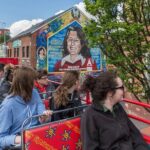
- Divis Street and the International Mural Wall: where the story starts
- Peace Walls and Peace Gates: signing your name on a living divider
- Shankill Road murals: Loyalist heartland, powerful imagery
- Clonard Martyrs Memorial Garden: names, dates, and the cost of resistance
- Milltown Cemetery Republican Plot: Bobby Sands and the hunger strike legacy
- D Company sites and the Bobby Sands murals: the 30-year guerilla war angle
- The IRA History Museum (Eileen Hickey): the most educational stop
- Clonard Monastery and the interface story: where streets turn into pressure points
- Divis Tower and Ballymurphy Road: murals plus the military gaze
- The Welcome Wall, and the biggest Peace Wall drive-by
- What makes the guide factor huge here
- Who should book this Belfast political and memorial tour
- Should you book the IRA Troubles Conflict private tour?
- FAQ
- How long is the Belfast Troubles private tour?
- What does the tour cost per person?
- Is this tour private?
- Where is pickup available?
- When is the Irish Republican History Museum open?
- Is there an IRA history museum plus cemetery entry included?
- Can I get a full refund if I cancel?
Key highlights to expect
- Peace Walls up close, including a chance to sign your name and write a peace message
- Murals on the Falls Road and Shankill Road, tied to specific events and organizations
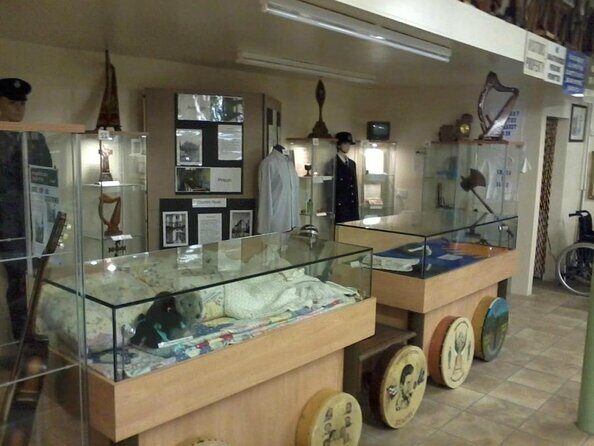
- A private museum visit (typically only open Tue–Sat 10–2) plus time to ask questions
- Clonard Martyrs Memorial Garden, with plaques listing names and dates
- Milltown Cemetery Republican Plot, including Bobby Sands’ resting place
- Belfast interface areas like Clonard Monastery, Divis Tower, and Ballymurphy Road
How this private Troubles tour delivers value fast
For $255.50 per person, you’re paying for something you can’t copy with a rental car and a rough map: private time with a guide who is allowed to talk at length, stop when you want photos, and answer questions as you go. The itinerary is packed, but that’s part of the deal—your guide uses the drive time to explain what you’re seeing, instead of just getting you from one stop to the next.
This is also a “know what you’re buying” kind of tour. It’s not a neutral walking tour of Belfast streets. It’s built around Republican interpretation of the Troubles, with stops that support that story: murals, commemorations, and the IRA-linked memorial network in West Belfast.
You can also read our reviews of more private tours in Belfast
The meeting points that matter: pickup, vehicle, and real time on the clock
You’ll get pickup from the Leonardo hotel in Belfast (extra charges if you start elsewhere). The tour includes private transportation in an air-conditioned vehicle, and the driver handles navigation so you can focus on the streets, walls, and signage.
Because the tour is about short stops sprinkled among drives, timing matters. When you’re spending 3 hours total, even a few minutes can change how much you absorb. If your lodging isn’t near the central pickup point, ask about the added fee ahead of time so you don’t feel rushed.
Divis Street and the International Mural Wall: where the story starts
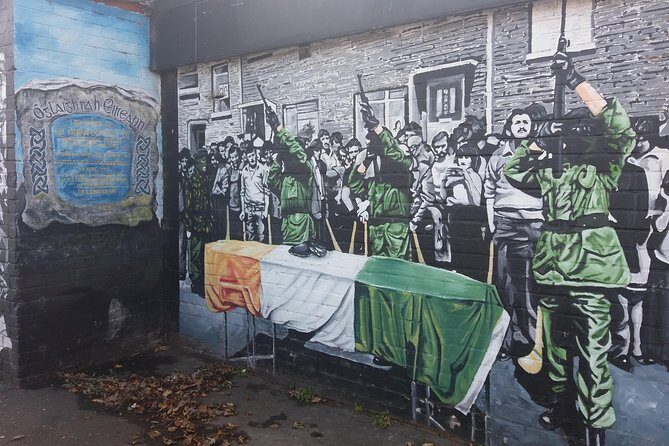
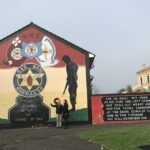
The tour begins at the International Mural Wall on Divis Street, then heads toward the Falls Road. This part is designed to set context—how the conflict unfolded and why Belfast became physically divided, not just politically divided.
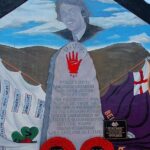
You’ll hear about the Peace Walls concept from the guide’s viewpoint and see murals painted by ex-prisoners (POWs). These aren’t casual “street art” stops. The murals are presented as political messages tied to specific phases of the conflict, with the guide using the wall as a classroom.
What to watch for: the way the guide links mural themes to timing—how violence escalated, how neighborhoods hardened, and how symbolism kept evolving even after the ceasefire period. If you like to ask follow-up questions, this is where your guide usually has the most room to explain.
Peace Walls and Peace Gates: signing your name on a living divider
The next key stop is the Peace Wall—one of those Belfast facts that looks simple from a distance, but hits differently when you’re standing near it. You’ll learn why the separation barriers were built, and you’ll visit both sides so you can physically sense the distance between communities that still live with that division.
A neat detail here is the activity: you can sign your name and write a message of peace. It’s a small act, but it matches the tour’s tone—this isn’t just about past events. The wall is still here, and the message is a reminder that people are still navigating the legacy.
Practical note: bring a pen-friendly mindset—your guide will handle what’s needed, but the point is that you’re interacting with the wall, not just photographing it. Also, expect the guide to talk about why the walls were not removed even when the political situation changed.
Shankill Road murals: Loyalist heartland, powerful imagery
On the Shankill Road, you’ll be in the Loyalist neighborhood that the tour describes as the heartland of Ulster Loyalism. The stop focuses on how Loyalism developed and evolved, and it ties the murals to the Loyalist paramilitary groups mentioned on the tour: UDA/UFF and UVF.
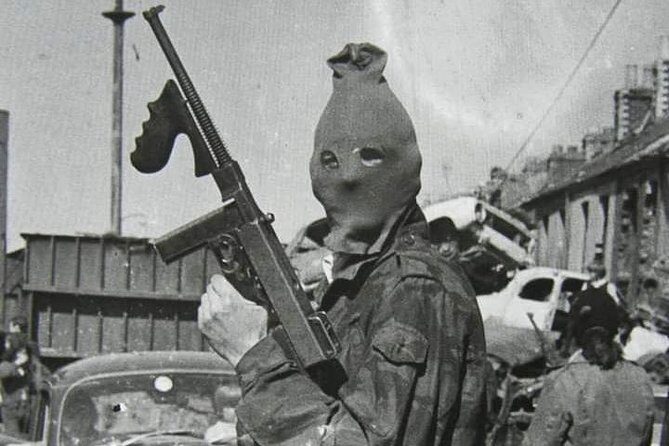
You’ll have time for photos of murals showing masked men with weapons—imagery that can feel intense and polarizing. The guide’s job is to connect those pictures to the Troubles narrative you’re already hearing, including what this side believed and how conflict played out across the interface.
Possible drawback to keep in mind: if you came hoping for an even-handed “both sides, same depth” approach, this segment may feel weighted in one direction. The tour is explicit about its framing, and the guide usually stays inside that story.
You can also read our reviews of more museum experiences in Belfast

Clonard Martyrs Memorial Garden: names, dates, and the cost of resistance
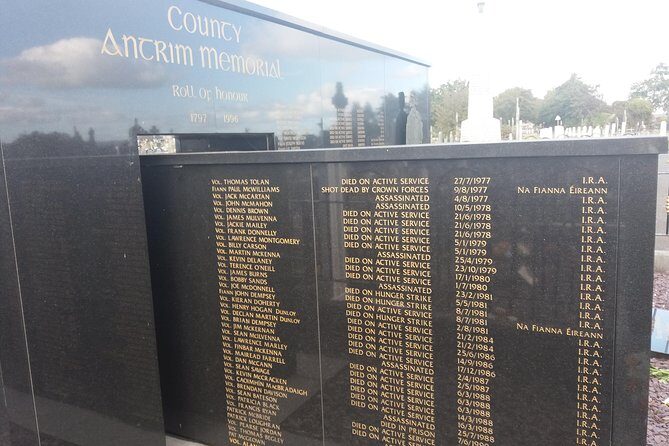
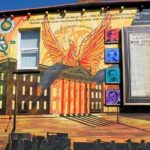
Clonard Martyrs is where the tour turns from murals and political analysis into something more personal and heavy. You’ll visit a memorial garden commissioned by the Greater Clonard Ex-Prisoners’ Association, with plaques that commemorate fallen volunteers and civilian casualties from the Greater Clonard area.
The tour’s description is detailed: there are sections recalling Republican prisoners who died between 1916 and 1970, plaques for specific time ranges, and even a central yard with a black and white Celtic cross. You’ll also see references to the inception of the Provisional IRA and the idea that residents endured direct attacks in this part of West Belfast.
Why this stop is valuable: you get a sense of how memory gets organized in space—how communities preserve identities, list names, and keep anniversaries through the years. It’s also one of the most important “interpretation” stops on the route, because the guide ties the memorial design to their explanation of the conflict’s arc.
Milltown Cemetery Republican Plot: Bobby Sands and the hunger strike legacy
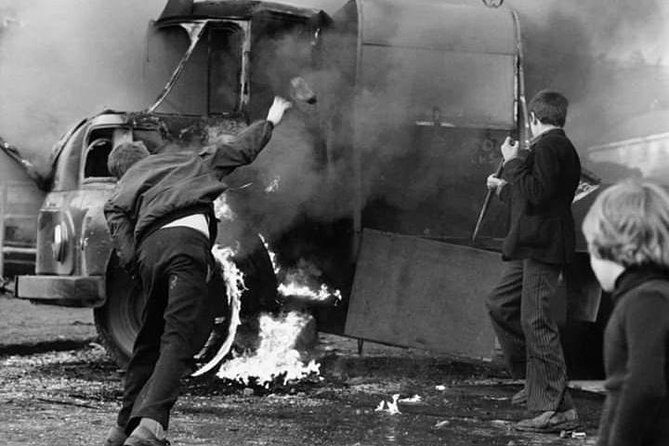
At Milltown Cemetery, you’ll focus on the Republican Plot, including Bobby Sands’ resting place. The tour explains Sands’ role as a member of the Provisional IRA and his death on hunger strike after being imprisoned at HM Prison Maze. It also ties the 1981 hunger strike to protests over the removal of Special Category Status.
This is not a quick drive-by. You’ll have about 25 minutes centered on the cemetery’s Republican plots and graves marked with the Red Hand. The tour notes the New Republican Plot contains remains of 77 IRA volunteers, and it also describes other republican plot areas linked to earlier conflicts and campaigns.
A small but meaningful detail: the cemetery work is credited to the National Graves Association in Belfast, which helps you understand that this isn’t random memorials placed by accident. It’s organized remembrance.
What to do here: go slowly while you’re taking photos or reading plaques. Even if you think you know this chapter of history, cemetery memorials tend to reset your brain to the human scale of the conflict.
D Company sites and the Bobby Sands murals: the 30-year guerilla war angle
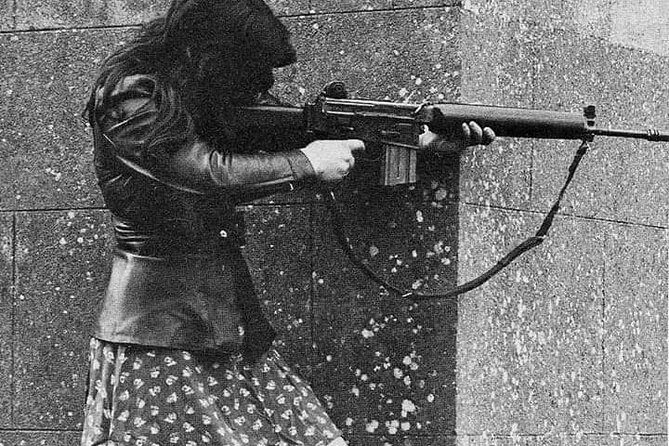
You’ll then move back into murals and remembrance linked to the IRA’s West Belfast battalion system. The tour mentions the 2nd Battalion IRA Garden of Remembrance, also known as D Company, and connects the area to events like the Battle of the Falls in 1970 and the Falls Road Massacre in 1920.
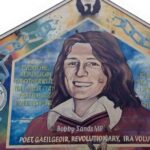
There’s also a stop that’s explicitly about the Bobby Sands mural, with time to photograph it. The guide is set up to explain the blanket and dirty protests that led to the 1981 hunger strikes, plus other visual references like hunger strikers’ photos.
If you’re someone who likes your history tied to specific places, this is a strong section. It gives the conflict a geography: Falls Road, interface areas, memorial gardens, and murals that keep the events visible even after decades.
The IRA History Museum (Eileen Hickey): the most educational stop
This is one of the big selling points, because it’s described as a private museum that isn’t usually open to the public. You’ll learn about resistance described in the tour as against British occupation, stretching back 800 years in Ireland, and you’ll hear from ex-prisoners of war who share their experiences of the conflict.
The museum only opens 10–2 Tuesday to Saturday. If it’s closed, the plan is to show you around Ballymurphy instead. That’s helpful because it means the tour isn’t totally dependent on perfect timing.
One detail I’d personally treat as a highlight: you’ll see and handle plastic and rubber bullets used by British crown forces. Handling objects like that changes the feel of history. It’s not abstract anymore.
Clonard Monastery and the interface story: where streets turn into pressure points
Clonard Monastery sits at an interface area between Catholic Falls Road and Protestant Shankill Road. The tour explains that priests from Clonard were involved from the outset trying to safeguard residents, and it connects the area to the attacks of August 14, 1969, when loyalist mobs launched assaults on houses owned by Catholics in Bombay Street and Cupar Street, forcing residents to flee and burning buildings.
You’ll also hear about peace figures linked to Clonard, named on the tour as Frs. Alec Reid and Gerry Reynolds, who lived there. That adds balance inside the Catholic narrative—reminding you that not all religious influence in these streets pointed toward violence.
What to watch for: the guide will likely tie the physical layout (how streets connect) to how attacks and rumors moved. That’s one reason interface locations like this matter on a Troubles tour.
Divis Tower and Ballymurphy Road: murals plus the military gaze
Divis Tower is described as overlooking the Falls Republican stronghold, where the British Army had a snipers nest and spy post up until 2005. The stop includes seeing names and murals of the first two victims of the Troubles.
Then you’ll drive through republican Ballymurphy, with time for murals tied to An Gorta Mor and local volunteers. The tour calls out Jim Bryson and his Big Louie machine gun used to terrify the British Army. It also notes these are “amazing murals,” which makes this feel like a visual lecture where the guide translates symbols into events.
If you want to understand why murals are such a big part of Belfast identity, this segment helps. You’re not just looking at pictures—you’re learning what those pictures were meant to protect and broadcast.
The Welcome Wall, and the biggest Peace Wall drive-by
Near the end, you’ll see the Welcome Wall and then the biggest Peace Wall in Belfast from the car. These last bits are shorter—only a few minutes each—but they serve a purpose: they wrap the tour with “big picture” markers that show how strong these themes are across the city.
By the time you reach the biggest Peace Wall drive-by, you usually feel the rhythm of the tour: wall, mural, memorial, and analysis, repeated across different neighborhoods. That repetition is part of the meaning here. Belfast didn’t just experience conflict; it built permanent reminders of it.
What makes the guide factor huge here
This tour lives or dies on the guide’s ability to explain without turning the experience into a lecture you can’t question. The reviews you provided highlight guides like Barry and Joe, with personal lived experiences shared during the tour, and guides like Paula, Ciarán, Kieran, Brendan, and Anton noted for strong interpretation and the ability to answer questions.
One practical advantage of a private format: your guide can adjust stops based on what you care about. In the reviews, people praised guides for tailoring the trip and spending extra time where questions ran deep. If you’re the type who comes with notes or wants to ask about specific events, you’ll get more value than with a fixed script group tour.
Who should book this Belfast political and memorial tour
You’ll get the most from this experience if you:
- want a Troubles tour from the Irish Republican side, with heavy attention to murals and memory sites
- care about understanding how neighborhoods stay divided even after political change
- prefer short stops with lots of Q and A over a long lecture
- can handle emotionally intense sites like memorial gardens and hunger strike references
You might want to skip it if your main goal is a neutral, balanced “both sides with equal time” overview. Even with the stops that touch Loyalist imagery, the tour’s core framing stays Republican.
Should you book the IRA Troubles Conflict private tour?
If you want a Belfast experience that feels grounded in place—walls you can sign, memorial gardens with names, murals tied to specific eras—this tour is a strong choice. The private museum element, the cemetery visit, and the Peace Wall moment give you more access and more context than most short city sightseeing plans.
My advice: book it if you’re ready for the Troubles to feel real and close. Don’t book it if you’re only looking for light political background or a one-size-fits-all “everybody’s version” tour.
FAQ
How long is the Belfast Troubles private tour?
It runs about 3 hours.
What does the tour cost per person?
The price listed is $255.50 per person.
Is this tour private?
Yes. It’s a private tour/activity, and only your group will participate.
Where is pickup available?
Free pickup is offered from the Leonardo hotel. Pickup from other locations can cost extra, and there is no pickup or drop-off from airports.
When is the Irish Republican History Museum open?
The museum only opens 10–2 Tuesday to Saturday. If it’s closed, the plan is to show you around Ballymurphy instead.
Is there an IRA history museum plus cemetery entry included?
Yes. The tour includes admission tickets for the listed stops, including the museum and Milltown Cemetery, plus activities like signing your name on the Peace Wall.
Can I get a full refund if I cancel?
You can cancel for a full refund if you cancel at least 24 hours in advance of the experience start time. If you cancel less than 24 hours before, the amount paid will not be refunded.
You Might Also Enjoy

More Private Tours in Belfast


More Tours in Belfast



More Tour Reviews in Belfast
- Titanic Belfast Entrance Ticket: Titanic Visitor Experience Including SS Nomadic
★ 4.5 · 3,698 reviews